
Lung Cancer in Non-Smokers: Causes and Risk Factors
Many people believe lung cancer only affects smokers. It does not. Lung cancer in non-smokers is a real and growing concern, especially in polluted cities such as Delhi NCR. This guide explains the causes of lung cancer in non-smokers, the main lung cancer risk factors and the warning signs worth acting on.
What Causes Lung Cancer in Non-Smokers?
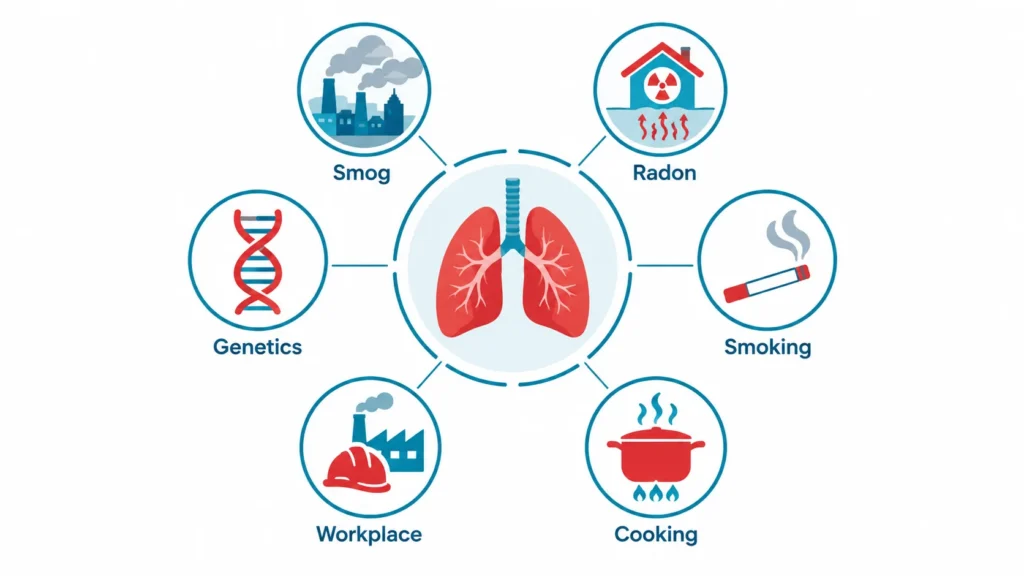
The main causes of lung cancer in non-smokers are air pollution, radon exposure, secondhand smoke, workplace carcinogens such as asbestos, family history and gene changes such as an EGFR mutation. About 10 to 25% of lung cancers worldwide occur in people who have never smoked.
The key points at a glance:
- Never smoking lowers risk but does not remove it.
- Most cases in non-smokers are adenocarcinoma, which grows in the outer lung and may cause few early symptoms.
- Early detection greatly improves treatment options.
Why Does Lung Cancer Happen in People Who Never Smoked?
Lung cancer in never-smokers is often driven by gene changes inside lung cells, combined with long-term exposure to environmental carcinogens. It is considered biologically different from smoking-related lung cancer.
Here is how it differs:
- Most cases are adenocarcinoma, usually starting in the outer lung.
- Targetable gene changes such as EGFR mutation lung cancer and ALK rearrangements are more common, which opens the door to targeted therapy.
- Indian clinicians report a growing share of cases in women and younger adults.
Causes of Lung Cancer in Non-Smokers and Key Risk Factors
Established causes include outdoor and indoor air pollution, radon gas, passive smoke, occupational exposure to asbestos or silica, and inherited risk. Several act together over many years.
The most important lung cancer risk factors are:
- Air pollution and lung cancer: Long-term exposure to fine particles (PM2.5) raises risk, and outdoor air pollution is classed as a Group 1 carcinogen.
- Radon exposure: This natural radioactive gas can build up indoors and is the second leading cause of lung cancer overall.
- Secondhand smoke: Living or working with smokers raises risk.
- Indoor cooking fumes: Smoke from wood, coal or dung fuel in poorly ventilated kitchens.
- Workplace exposure: Asbestos, silica and diesel exhaust.
- Family history: A close relative with lung cancer increases risk, including lung cancer in women who never smoked.
- Past chest radiation or chronic lung disease.
Non-Smoker Lung Cancer Symptoms: Early Signs Not to Ignore
Non-smoker lung cancer symptoms include a cough lasting more than three weeks, coughing blood, breathlessness, chest pain, hoarseness, unexplained weight loss and repeated chest infections. Many are mistaken for asthma or infection.
See a doctor if you notice:
- A persistent cough or a change in an existing cough
- Blood in sputum
- Shortness of breath or wheezing
- Chest, shoulder or back pain
- A hoarse voice
- Weight loss or fatigue without a clear reason
How Is Lung Cancer in Non-Smokers Diagnosed and Treated?
Diagnosis uses a CT scan and biopsy, followed by molecular testing for gene changes. Early-stage tumours are usually treated with surgery, often robotic lung cancer surgery, while targeted therapy helps many mutation-positive patients.
The usual pathway:
- CT scan, PET-CT and biopsy to confirm type and stage.
- Molecular testing (EGFR, ALK, ROS1 and others), as recommended by NCCN guidelines.
- Surgery for early-stage disease. The robotic approach uses small incisions for less pain and quicker recovery.
- Targeted therapy, immunotherapy, chemotherapy or radiotherapy for advanced disease.
- Routine screening scans are not advised for all non-smokers, so high-risk individuals should discuss options with a doctor.
Read more: Robotic vs Open Cancer Surgery
How to Lower Your Risk
You can lower risk by limiting exposure to polluted air, avoiding secondhand smoke, using clean cooking fuel with good ventilation, testing for radon where relevant and using protective equipment at work.
Practical steps:
- Wear an N95 mask and avoid outdoor exercise on high-AQI days.
- Use a HEPA air purifier indoors.
- Choose clean cooking fuel and ventilate the kitchen.
- Keep your home smoke-free.
- Follow workplace safety rules for dust and fumes.
- Get persistent symptoms checked early.
Take the Next Step
If you have persistent symptoms or risk factors, consult a qualified lung cancer surgeon in Delhi early.
Book a consultation with a lung cancer surgeon to review your reports and options. Carry the following for your consultation:
- CT scan, biopsy, and blood reports
- Your family and exposure history
- A list of your questions
Medical disclaimer: This article is for general education and does not replace advice from a qualified doctor.
Frequently Asked Questions
Q1. Can non-smokers get lung cancer?
Ans. Yes. Roughly 10 to 25% of lung cancer patients worldwide have never smoked. Can non-smokers get lung cancer is a common question, and causes include pollution, radon, passive smoke, genes and workplace exposure.
Q2. Can air pollution in Delhi cause lung cancer?
Ans. Long-term exposure to fine particulate pollution increases lung cancer risk, and outdoor air pollution is a classified human carcinogen. Whether air pollution in Delhi can cause lung cancer depends on years of exposure, other risk factors and genetics.
Q3. What are the first symptoms of lung cancer in non-smokers?
Ans. The first symptoms of lung cancer in non-smokers are often a persistent cough, breathlessness, chest discomfort or repeated chest infections. Early disease may cause no symptoms at all.
Q4. Why is lung cancer rising in non-smokers in India?
Ans. Doctors point to air pollution, indoor cooking smoke, passive smoking and better detection as likely contributors, but the exact reasons are still being studied. This is the core of why lung cancer is rising in non-smokers in India.
Q5. Where can I find a lung cancer surgeon in Delhi NCR?
Ans. Look for a surgical oncologist who performs robotic lung cancer surgery regularly. Dr. Surender Kumar Dabas is a cancer surgeon in Delhi NCR who provides lung cancer treatment in Delhi NCR for patients with lung cancer.
References
- Loomis D, et al. The carcinogenicity of outdoor air pollution. Lancet Oncol. 2013;14:1262-1263.
- World Health Organization. WHO Handbook on Indoor Radon. 2009.
- Sun S, Schiller JH, Gazdar AF. Lung cancer in never smokers: a different disease. Nat Rev Cancer. 2007;7:778-790.
- NCCN Guidelines: Non-Small Cell Lung Cancer (current version).
- IARC Monographs Vol 83: Tobacco Smoke and Involuntary Smoking. 2004.
- IARC Monographs Vol 100C: Arsenic, Metals, Fibres and Dusts. 2012.

 WhatsApp