
Oral Cancer Treatment in Delhi NCR
Oral cancer is the uncontrolled growth of malignant cells anywhere in the mouth, including the tongue, lips, cheeks, gums, floor of the mouth, and palate, and is one of the most common cancers in India, strongly linked to tobacco and betel nut use.
Oral cancer is a type of head and neck cancer that develops in the tissues of the mouth or oropharynx. India accounts for a disproportionately high share of global oral cancer cases, largely driven by tobacco chewing, smoking, and gutka use. When detected early, oral cancer is highly curable with surgery.
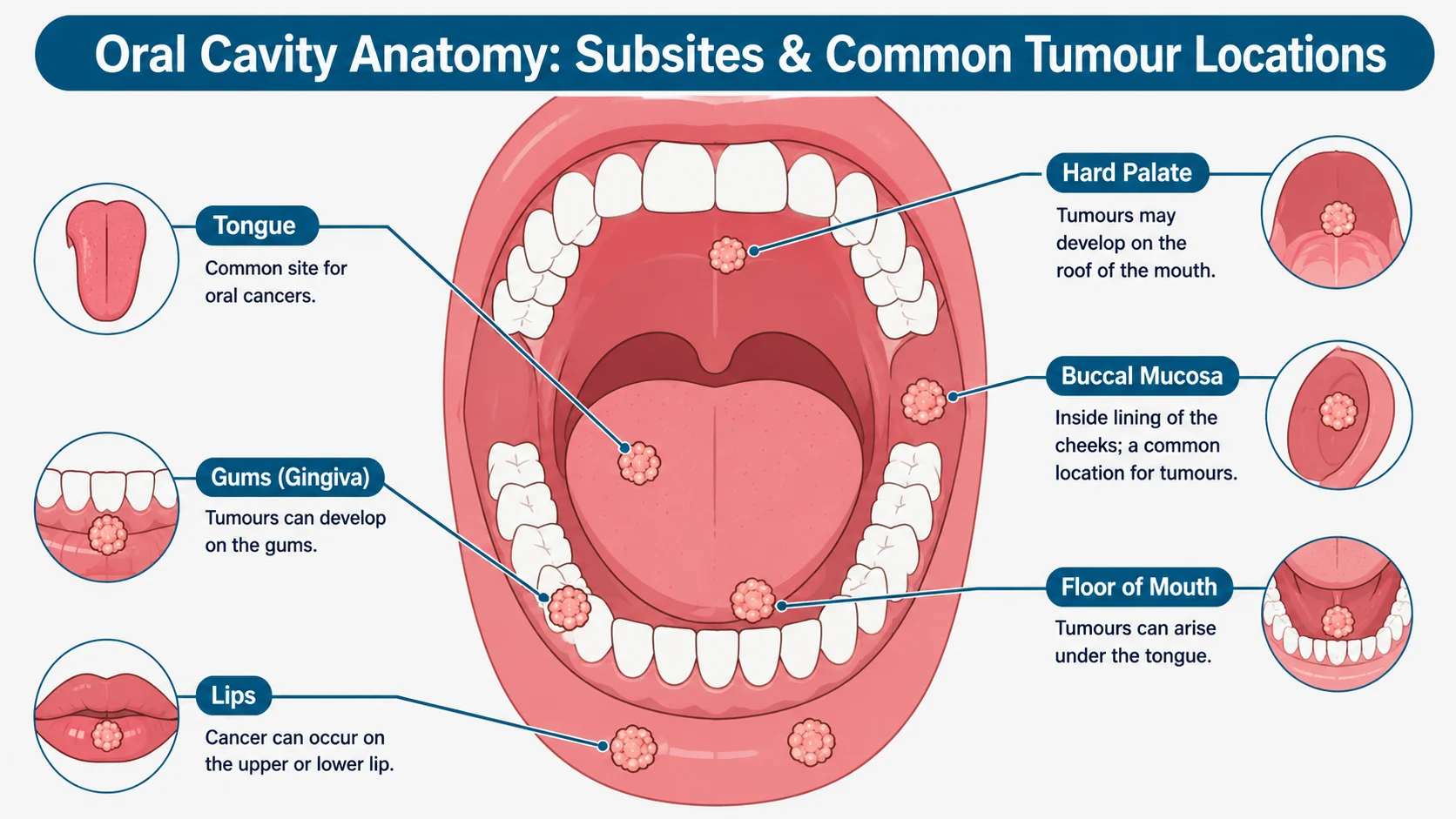
Common sites of oral cancer:
- Tongue cancer – the most common site; often develops on the sides or undersurface of the tongue
- Buccal mucosa cancer – inner lining of the cheeks; very common in tobacco-chewing patients in India
- Lip cancer – more common in the lower lip; often linked to sun exposure and smoking
- Floor of the mouth cancer – develops in the U-shaped area below the tongue
- Gum (gingival) cancer – develops along the upper or lower gums
- Hard palate cancer – roof of the mouth; less common
- Jaw cancer – can involve the mandible (lower jaw) or maxilla (upper jaw)
What Causes Oral Cancer?
Oral cancer is most commonly caused by tobacco use in any form, smoking, chewing tobacco, gutka, and betel nut are the leading risk factors for mouth cancer in India.
Common oral cancer causes and risk factors include:
- Tobacco chewing – the single largest oral cancer cause in India; gutka, paan masala, and betel quid with tobacco are major culprits
- Smoking – cigarettes, bidis, and hookah significantly increase mouth cancer risk
- Alcohol use – heavy alcohol combined with tobacco multiplies risk several times over
- HPV infection (Human Papillomavirus) – particularly HPV-16; increasingly linked to oral and oropharyngeal cancers
- Betel nut (areca nut) chewing – even without tobacco, areca nut is a recognised oral cancer risk factor
- Submucous fibrosis (SMF) – a pre-cancerous condition caused by betel nut chewing, common in Indian patients
- Poor oral hygiene – chronic irritation from sharp teeth, ill-fitting dentures, or poor dental care
- Sun exposure – a risk factor specifically for lip cancer
- Weakened immunity – patients on immunosuppressive therapy or with HIV have higher risk
Early Signs and Symptoms of Oral Cancer
The most important early sign of oral cancer is a mouth ulcer or white or red patch that does not heal within 3 weeks, any such lesion should be evaluated by an oral cancer specialist immediately.
Many patients delay seeking care because early oral cancer symptoms are painless or mistaken for routine mouth problems. Do not ignore:
- A mouth ulcer that does not heal within 2 to 3 weeks – the single most important warning sign
- White patch in the mouth (leukoplakia) – a pre-cancerous lesion that can transform into cancer
- Red patch in the mouth (erythroplakia) – carries a higher risk of malignant transformation than white patches
- Unexplained bleeding in the mouth not linked to injury
- A lump, thickening, or rough patch inside the mouth, on the lips, or in the throat
- Difficulty chewing, swallowing, or moving the tongue or jaw
- Persistent numbness of the tongue, lips, or chin
- Loose teeth with no clear dental cause
- A sore throat or hoarse voice that does not improve
- Unexplained weight loss and neck swelling (in advanced cases)
Oral cancer screening at home is simple – examine your mouth monthly under good light and see a doctor immediately if any of the above signs last more than 3 weeks.
Reach Out for Expert Care
How Is Oral Cancer Diagnosed?
Oral cancer is diagnosed through clinical examination and biopsy, a tissue sample from the suspicious lesion is the only way to confirm whether it is cancerous, and this should be done at a specialist oral cancer centre in Delhi NCR.
Dr. Surender Kumar Dabas, one of the best oral cancer doctor, follows a structured oral cancer diagnosis pathway:
- Clinical oral examination – thorough inspection of all mouth surfaces, tongue, throat, and neck for visible lesions and lymph node enlargement
- Biopsy – a small tissue sample from the suspicious area; the definitive test for oral cancer diagnosis
- Incisional biopsy or punch biopsy – done under local anaesthesia in the clinic for accessible lesions
- OPG (Orthopantomogram) X-ray – dental panoramic X-ray to assess jaw bone involvement
- CT scan with contrast – evaluates tumour size, depth of invasion, lymph node involvement, and jawbone status
- MRI – best imaging for soft tissue extent, tongue base invasion, and perineural spread
- PET scan – detects spread to lymph nodes and distant organs; essential for staging advanced oral cancer
- Chest X-ray or CT chest – rules out lung metastasis
Stages of Oral Cancer
Oral cancer is staged from Stage I to Stage IV, early-stage oral cancer is limited to the mouth, while advanced stages involve deeper invasion, lymph node spread, or distant metastasis.
| Stage | Description |
| Stage I | Tumour 2 cm or smaller, confined to the primary site, no lymph node involvement |
| Stage II | Tumour 2 to 4 cm, still localised, no lymph node spread |
| Stage III | Tumour larger than 4 cm OR spread to one lymph node on the same side |
| Stage IVA | Deep invasion into jaw, skin, or multiple lymph nodes |
| Stage IVB | Tumour invades skull base or carotid artery; unresectable |
| Stage IVC | Distant metastasis to lungs, liver, or bones |
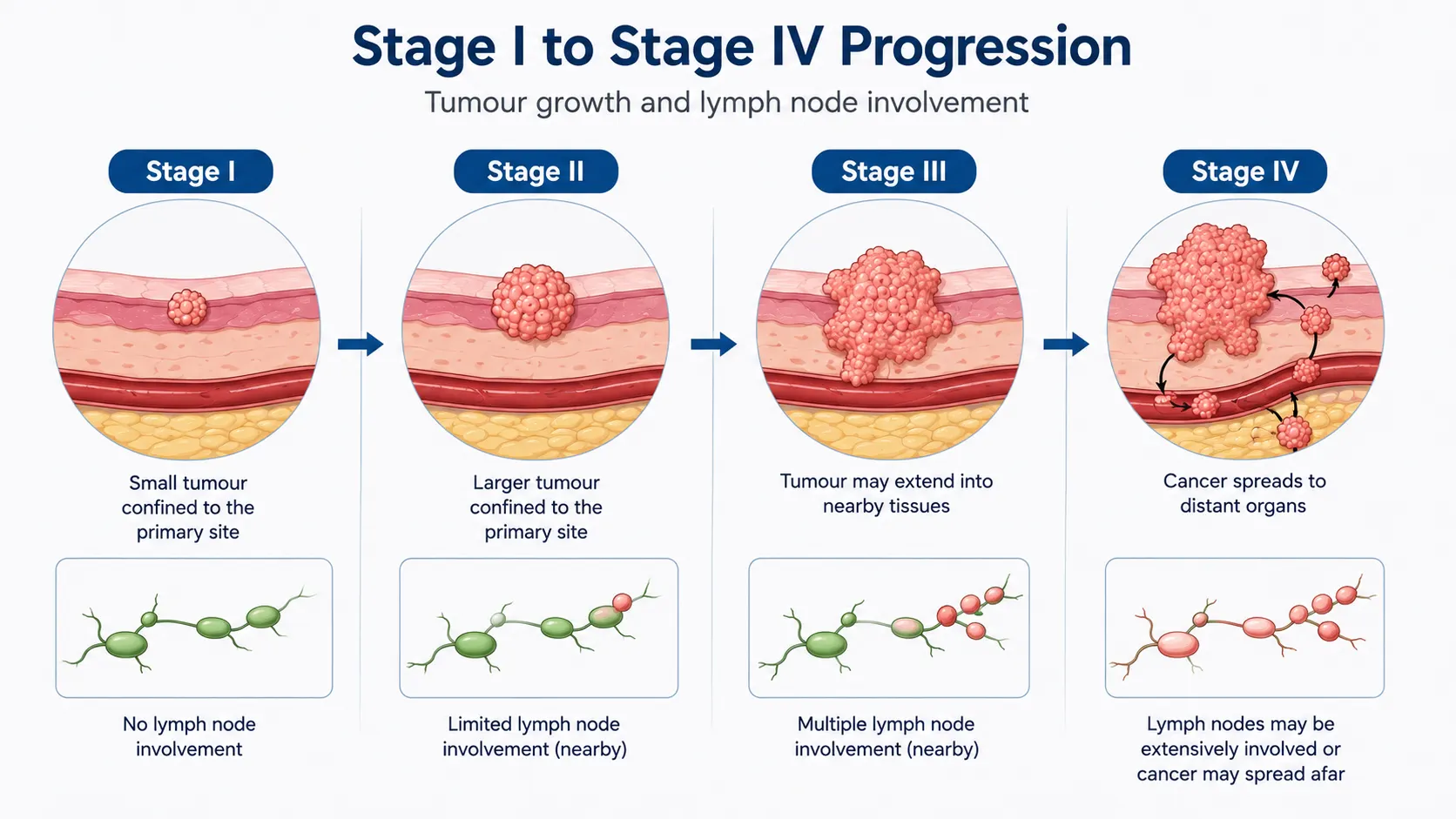
Stage I and II oral cancer has an excellent prognosis with surgery. Stage III and IVA are treatable with combined surgery and radiation. Early evaluation by the best oral cancer surgeon in Delhi NCR significantly improves outcomes at every stage.
Oral Cancer Treatment Options in Delhi NCR
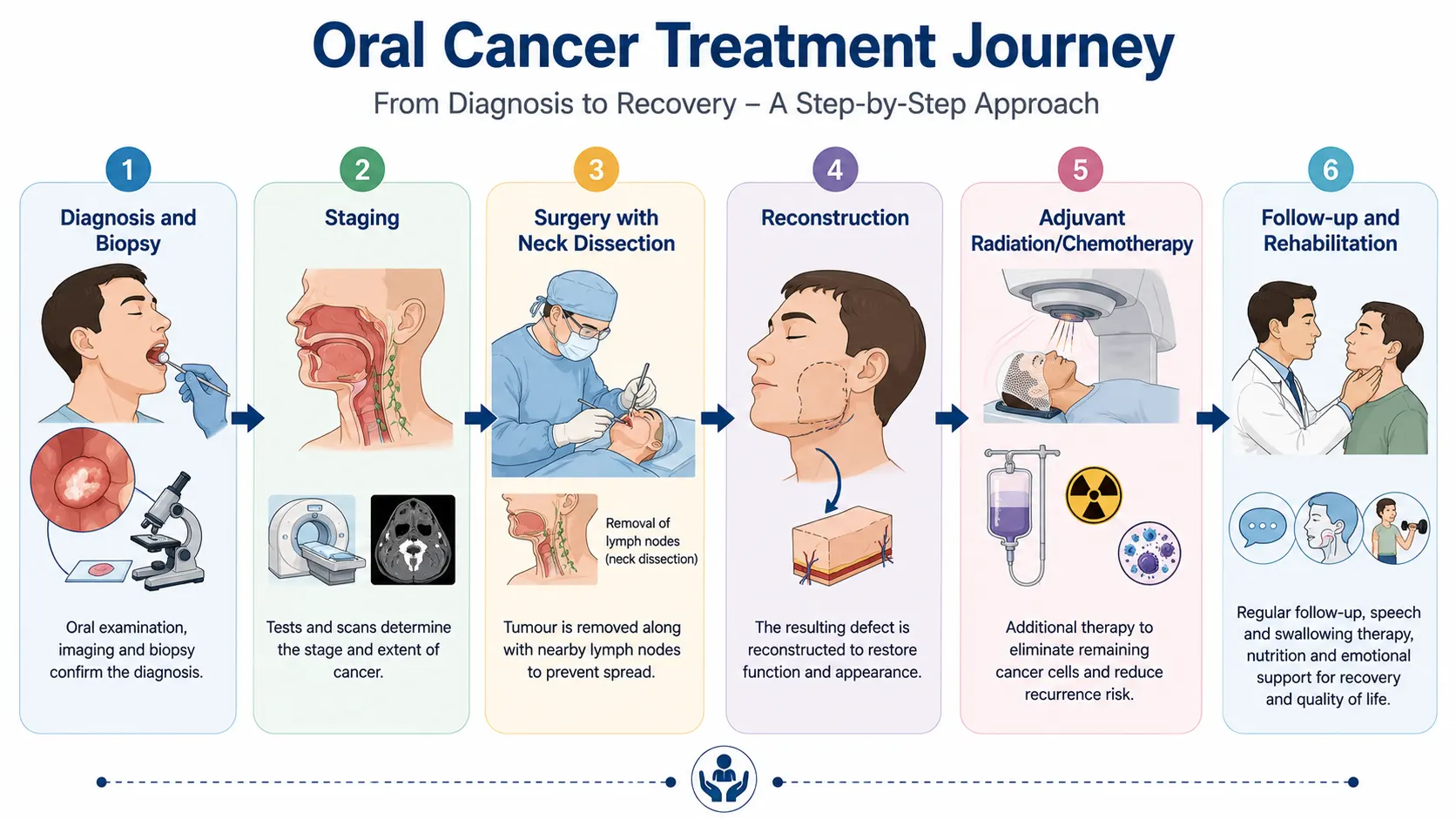
Surgery is the primary treatment for oral cancer, the tumour is removed along with a margin of healthy tissue and often with neck dissection, followed by radiation therapy and chemotherapy depending on the stage and risk factors.
Dr. Surender Kumar Dabas, one of the best oral cancer surgeons in Delhi NCR, offers a comprehensive range of mouth cancer treatments personalised to each patient’s tumour location, stage, and functional needs.
- Oral Cancer Surgery – Primary Tumour Removal
- Wide local excision – removal of the tumour with clear margins; standard for small, early-stage oral cancer
- Glossectomy – partial or total removal of the tongue for tongue cancer; Dr. Dabas prioritises function-preserving surgery wherever possible
- Buccal mucosa cancer surgery – excision of inner cheek tumours; most common oral cancer surgery in India
- Mandibulectomy surgery – partial or complete removal of the lower jaw when jawbone is involved
- Maxillectomy surgery – removal of part of the upper jaw (maxilla) for hard palate or upper gum cancers
- Lip cancer surgery – excision with careful reconstruction to preserve lip function and appearance
- Neck Dissection Surgery
- Removal of lymph nodes from the neck to check for or treat spread of oral cancer
- Selective neck dissection – removes specific lymph node groups at risk; preserves neck muscles and nerves wherever possible
- Modified radical neck dissection – for patients with confirmed lymph node involvement
- Performed alongside primary tumour surgery in one combined procedure
- Oral Cancer Reconstruction Surgery
- Reconstruction after mouth cancer surgery is as important as tumour removal, it restores the ability to speak, eat, and swallow
- Microvascular free flap reconstruction, gold standard; healthy tissue (skin, muscle, or bone) is taken from the forearm, thigh, or fibula and transferred to rebuild the mouth, jaw, or tongue
- Pedicled flaps, used for smaller defects; tissue from the chest or neck is used for reconstruction
- Dr. Dabas has extensive experience in reconstructive surgery after oral cancer, combining oncological clearance with functional and cosmetic restoration
- Robotic Oral Cancer Surgery
- Robotic oral cancer surgery using the Da Vinci system is used for selected oropharyngeal and tongue base tumours
- Allows access to difficult-to-reach areas with precision, avoiding the need for jaw-splitting surgery in selected cases
- Results in faster recovery and better functional outcomes for eligible patients
- Radiation Therapy for Oral Cancer
- Given after surgery (adjuvant radiotherapy) for high-risk features, close margins, lymph node involvement, or perineural invasion
- Used as the primary treatment for patients who are not surgical candidates
- Intensity-modulated radiation therapy (IMRT) minimises dose to surrounding structures including salivary glands and the spinal cord
- Chemotherapy for Oral Cancer
- Concurrent chemoradiation, chemotherapy (cisplatin) given alongside radiation to enhance its effect; used for Stage III and IVA oral cancer after surgery
- Induction chemotherapy, used to shrink large tumours before surgery in selected advanced cases
- Palliative chemotherapy is used for metastatic oral cancer to extend survival and manage symptoms
- Targeted Therapy and Immunotherapy for Oral Cancer
- Cetuximab (anti-EGFR targeted therapy) used in combination with radiation or chemotherapy for advanced oral cancer
- Pembrolizumab and nivolumab (checkpoint inhibitors) are approved for recurrent or metastatic head and neck cancer that progresses on chemotherapy
- Molecular profiling helps identify patients who may benefit from targeted therapy options
Why Choose Dr. Surender Kumar Dabas for Oral Cancer Treatment in Delhi NCR?
Dr. Surender Kumar Dabas is one of the best head and neck cancer surgeons in Delhi NCR with 22+ years of experience, 5,000+ robotic surgeries, and specialist expertise in oral cancer surgery, neck dissection, and microvascular reconstructive surgery.
- 22+ years of experience in surgical oncology with a dedicated focus on head and neck cancer including oral cancer, tongue cancer, jaw cancer, and throat cancer
- 5,000+ robotic surgeries, one of the highest robotic surgery volumes among cancer surgeons in India; applies da Vinci precision to selected robotic oral cancer surgery cases
- 30,000+ complex cancer surgeries across head and neck, GI, thoracic, and urological cancers
- Pioneer in robotic head and neck surgery, performed among the highest number of robotic head and neck cancer surgeries in Asia; the same expertise extends to oral cavity tumours
- Microvascular reconstruction expertise, experienced in free flap reconstructive surgery after oral cancer, restoring speech, swallowing, and facial appearance after major resections
- Function-first approach, every surgical plan prioritises tumour clearance while preserving maximum speech and swallowing function for quality of life after surgery
- Multidisciplinary oral oncology care, coordinates with radiation oncologists, medical oncologists, speech therapists, and dental oncologists for complete patient care
- Patients from across India and abroad including Noida, Gurgaon, Faridabad, and international patients seek oral cancer treatment by Dr. Surender Kumar Dabas
Cost of Oral Cancer Treatment in Delhi NCR
Oral cancer treatment cost in Delhi NCR depends on several factors:
- Stage and location of tumour, tongue, buccal mucosa, jaw, lip, or floor of mouth
- Type of surgery, wide excision, glossectomy, mandibulectomy, maxillectomy
- Extent of neck dissection required
- Need for microvascular free flap reconstruction
- Adjuvant radiation and chemotherapy requirements
- Duration of hospital stay and rehabilitation
For a personalised cost estimate based on your biopsy reports and imaging, book an oral cancer consultation in Delhi with Dr. Surender Kumar Dabas, one of the best surgical oncologist, at Manipal Hospital Dwarka or Manipal Jivisha Cancer Centre, Sonipat.
If you or a family member has been diagnosed with oral cancer, or has noticed a mouth ulcer, white patch, or red patch that has not healed in 3 weeks, early specialist evaluation is the most important step.

Dr. Surender Dabas' Medical Content Team
Dr. Surender Dabas' Medical Content Team is committed to providing accurate, reliable, and easy-to-understand information on cancer care. Working closely with oncology experts, the team ensures that every article is medically reviewed, up-to-date, and designed to help patients and their families better understand cancer, treatment options, and recovery.

 WhatsApp