
Thymus cancer Treatment in Delhi NCR
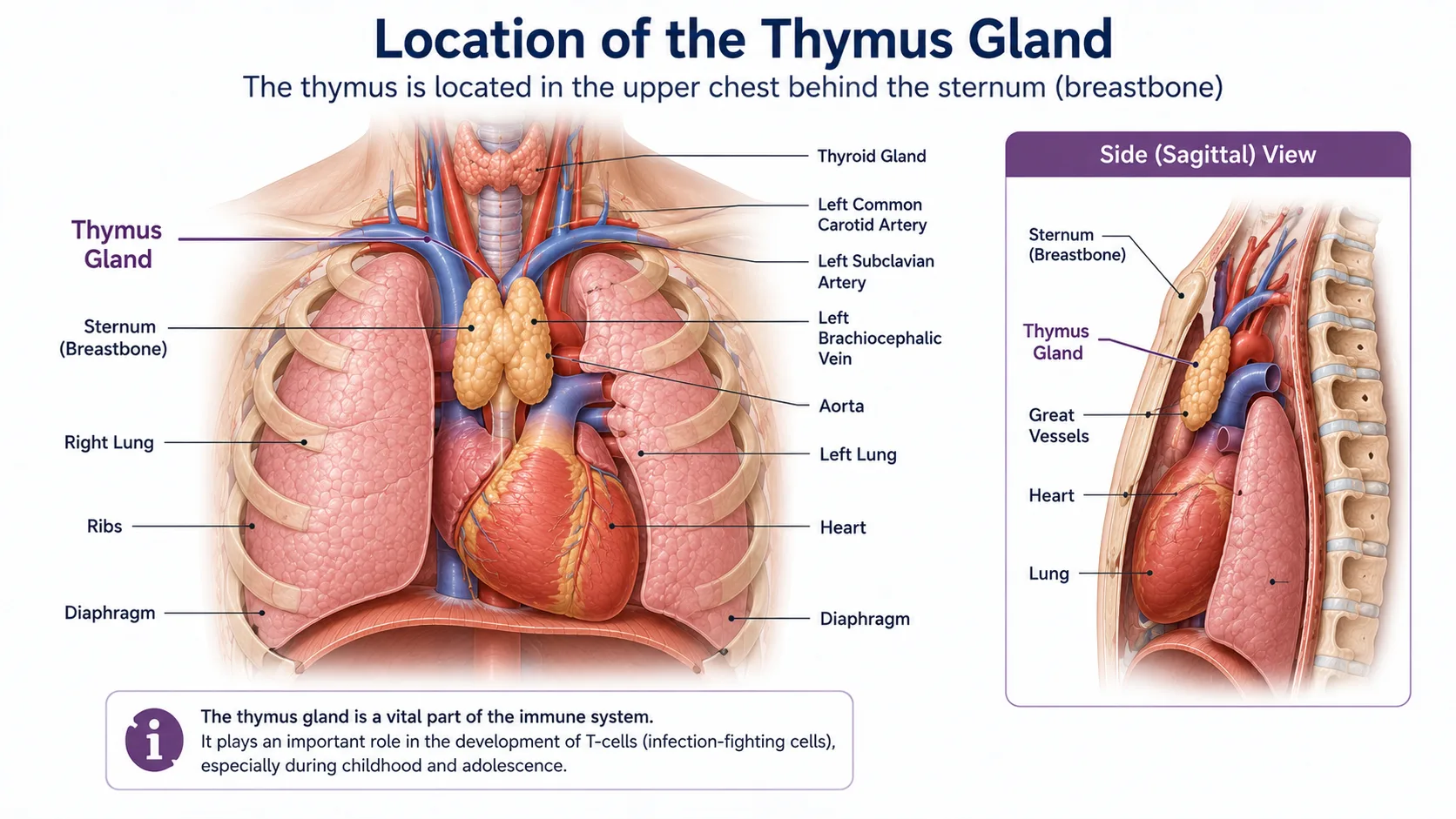
Thymus cancer, also called thymoma or thymic carcinoma, is a rare malignant tumour that develops in the thymus gland, a small organ behind the breastbone that plays a key role in immune system development.
The thymus gland sits in the upper chest, just behind the sternum (breastbone), in front of the heart. It is most active during childhood, helping train immune cells (T-lymphocytes). In adults, the thymus shrinks, but it can sometimes develop abnormal cell growth, leading to thymus cancer.
Two main types of thymic tumours:
- Thymoma, the more common type; tends to be slow-growing but can still invade nearby structures. Classified into subtypes (Type A, AB, B1, B2, B3) based on cell appearance under the microscope
- Thymic carcinoma, a more aggressive form of thymus cancer that is more likely to spread to distant organs and is harder to treat
Thymus cancer is rare, but when diagnosed early, surgery offers excellent outcomes, especially for thymoma, which has an approximately 90% five-year survival rate when completely resected.
What Causes Thymus Cancer?
The exact cause of thymus cancer is not fully understood, it develops when thymus cells grow uncontrollably, and unlike many cancers, it is generally not linked to lifestyle or environmental factors.
Known thymus cancer risk factors include:
- Age – most cases occur between 40 and 70 years; peak incidence is between 70 and 74 years
- Gender – thymoma affects men and women in roughly equal numbers
- Autoimmune conditions – particularly Myasthenia Gravis (MG); up to 30 to 40% of thymoma patients have MG at diagnosis
- Genetic factors – certain rare genetic mutations are associated with thymic tumours, though no strong hereditary link has been identified
- Previous radiation to the chest area may increase risk in some cases
- Unlike lung or gallbladder cancer, thymus cancer is generally not linked to smoking, diet, or chemical exposure
Symptoms of Thymus Cancer
Thymus cancer symptoms often develop only when the tumour grows large enough to press on surrounding structures, chest pain, breathlessness, and a persistent cough are the most common presenting complaints.
Many thymoma cases are discovered incidentally on chest X-rays or CT scans done for other reasons. When symptoms do appear, they include:
- Chest pain or pressure, caused by the tumour pressing on the chest wall or heart covering (pericardium)
- Shortness of breath, due to compression of the airways or lung tissue
- Persistent dry cough that does not resolve with standard treatment
- Difficulty swallowing (dysphagia), when the tumour presses on the oesophagus
- Swelling of the face, neck, or arms, caused by compression of the superior vena cava (SVC syndrome)
- Drooping eyelids, double vision, or muscle weakness, signs of Myasthenia Gravis associated with thymoma
- Unexplained weight loss and fatigue in advanced cases
If you or a family member has any of these thymus cancer symptoms, especially chest symptoms combined with muscle weakness or drooping eyelids, consult a specialist for evaluation.
Reach Out for Expert Care
How Is Thymus Cancer Diagnosed?
Thymus cancer is diagnosed through chest CT scan and biopsy, CT scan identifies the mediastinal mass, while biopsy confirms whether it is a thymoma, thymic carcinoma, or another tumour type.
Dr. Surender Kumar Dabas, one of the best surgical oncologist in India, uses a thorough thymus cancer diagnosis approach tailored to each patient:
- Chest X-ray, may show a widened mediastinum or anterior chest mass as an initial finding
- CT scan of the chest with contrast, gold standard for detecting and characterising thymic tumours; evaluates size, location, and involvement of surrounding structures
- MRI chest, useful for assessing invasion into the heart, great vessels, or pericardium
- PET scan, differentiates thymoma from thymic carcinoma based on metabolic activity; evaluates distant spread
- Blood tests, includes acetylcholine receptor antibodies to screen for associated Myasthenia Gravis
- CT-guided biopsy or mediastinoscopy, to obtain tissue for histopathological confirmation of thymus cancer type
- Pulmonary function tests, performed before surgery to assess lung capacity and surgical fitness
Stages of Thymus Cancer
Thymus cancer is staged from Stage I to Stage IVB using the Masaoka-Koga system, Stage I tumours are encapsulated and curable with surgery, while Stage IV indicates spread beyond the chest.
| Stage | Description |
| Stage I | Tumour fully enclosed within the thymus capsule, no invasion |
| Stage II | Invasion into surrounding fat or mediastinal pleura |
| Stage III | Invasion into nearby organs, lung, pericardium, or great vessels |
| Stage IVA | Spread to the pleura or pericardium (lining around the lungs and heart) |
| Stage IVB | Spread via the bloodstream to distant organs (lymph nodes, liver, bones) |
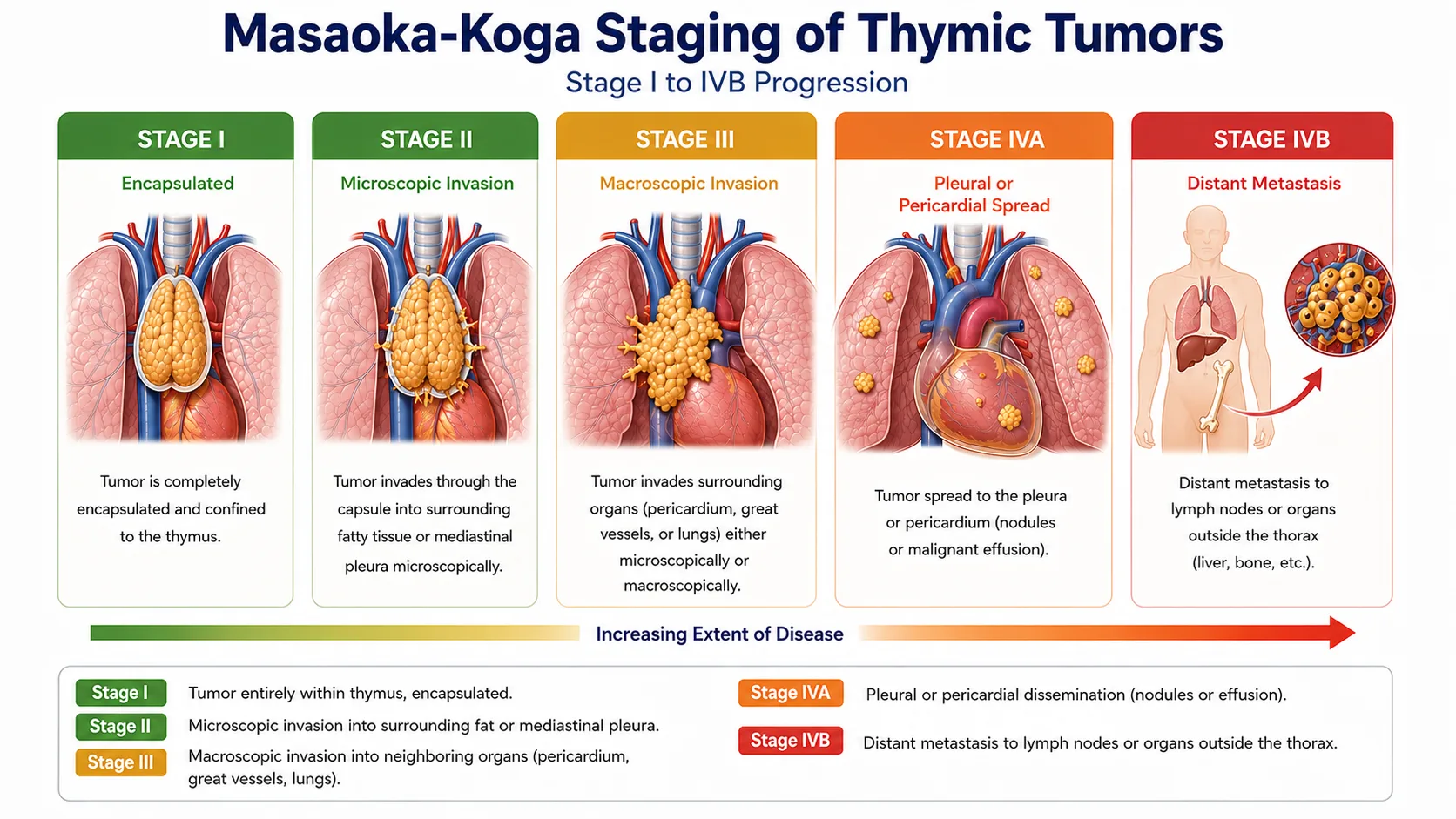
Stage I and II thymoma is highly curable with complete surgical removal. Stage III requires a multidisciplinary approach combining surgery, chemotherapy, and radiation. Stage IV thymic carcinoma treatment focuses on chemotherapy, targeted therapy, and quality of life.
Thymus Cancer Treatment Options in Delhi NCR
Surgery is the primary and most effective treatment for thymus cancer, complete surgical removal of the thymus gland (thymectomy) gives the best chance of cure, especially for early-stage thymoma.
Dr. Surender Kumar Dabas, one of the best thoracic cancer surgeons in Delhi NCR, offers a full range of thymus cancer treatments personalised to each patient’s tumour type, stage, and health status.
- Thymectomy – Surgical Removal of the Thymus
- Complete removal of the thymus gland and any involved surrounding tissue
- The cornerstone of thymoma treatment and the only potentially curative option
- Minimally invasive thymectomy (video-assisted or robotic), performed through small keyhole incisions in the chest; less blood loss, shorter hospital stay, faster recovery
- Open thymectomy via sternotomy, used for large tumours or those invading surrounding structures
- In patients with Myasthenia Gravis and thymoma, thymectomy frequently improves or stabilises MG symptoms post-surgery
- Neoadjuvant Chemotherapy Before Surgery
- Used for locally advanced thymus cancer (Stage III) to shrink the tumour before surgery
- Standard regimen: cisplatin-based combination chemotherapy
- Makes previously inoperable tumours resectable in selected patients
- Radiation Therapy for Thymus Cancer
- Given after surgery (adjuvant radiotherapy) to reduce the risk of local recurrence, particularly in Stage II and III thymoma
- Used as the primary treatment for patients who cannot undergo surgery
- Stereotactic body radiotherapy (SBRT) is used for selected localised cases
- Chemotherapy for Thymus Cancer
- Used for advanced, metastatic, or recurrent thymic carcinoma
- Thymoma typically responds to cisplatin and anthracycline-based regimens
- Thymic carcinoma is treated with platinum-based doublet chemotherapy combinations
- Chemotherapy is also used alongside surgery for Stage III disease
- Targeted Therapy and Immunotherapy
- For patients with advanced thymic carcinoma, newer agents are available based on molecular profiling
- Clinical trials are actively evaluating checkpoint inhibitors (pembrolizumab, atezolizumab) and targeted drugs for recurrent or refractory thymus cancer
- Patients with specific mutations may be eligible for targeted therapy options
- Hyperthermic Intrathoracic Chemotherapy (HITHOC)
- An advanced option for thymoma that has spread within the chest cavity
- Heated chemotherapy solution is delivered directly into the chest cavity after surgical tumour removal
- Available at select high-volume thoracic oncology centres
Why Choose Dr. Surender Kumar Dabas for Thymus Cancer Treatment in Delhi NCR?
Dr. Surender Kumar Dabas is one of the best robotic cancer surgeons in Delhi NCR with 22+ years of experience, 5,000+ robotic surgeries, and expertise in minimally invasive thoracic cancer surgery including thymectomy.
- 22+ years of experience in surgical oncology including complex thoracic cancers, lung, thymus, and mediastinal tumours
- 5,000+ robotic surgeries, one of the highest robotic surgery volumes among cancer surgeons in India; applies the same precision to minimally invasive thymectomy
- 30,000+ complex cancer surgeries performed across thoracic, GI, urological, and head and neck cancers
- Robotic and minimally invasive thymectomy, offers keyhole surgery for eligible thymoma patients, resulting in smaller scars, less pain, and faster recovery versus open sternotomy
- Multidisciplinary care, works with medical oncologists, radiation oncologists, and neurologists (for Myasthenia Gravis management) to build a complete thymus cancer treatment plan
- Myasthenia Gravis expertise, experienced in managing thymoma patients with coexisting MG, coordinating surgical and neurological care for the best overall outcome
- Clear communication, explains thymus cancer diagnosis, staging, and all treatment options in simple language so patients and families feel confident at every step
- Second opinion welcome, patients told their thymic tumour requires open surgery are encouraged to discuss minimally invasive options with Dr. Dabas
Cost of Thymus Cancer Treatment in Delhi NCR
The cost of thymus cancer treatment in Delhi NCR depends on several factors:
- Type and stage of tumour – thymoma vs. thymic carcinoma, and Masaoka stage
- Type of surgery – minimally invasive (robotic/VATS) thymectomy vs. open sternotomy
- Need for neoadjuvant or adjuvant chemotherapy and radiation
- Management of associated conditions such as Myasthenia Gravis
- Duration of hospital stay and post-operative care
For a personalised cost estimate based on your imaging and reports,you may book a consultation with Dr. Surender Kumar Dabas at one of the best thymus cancer doctor in Delhi.

Dr. Surender Dabas' Medical Content Team
Dr. Surender Dabas' Medical Content Team is committed to providing accurate, reliable, and easy-to-understand information on cancer care. Working closely with oncology experts, the team ensures that every article is medically reviewed, up-to-date, and designed to help patients and their families better understand cancer, treatment options, and recovery.

 WhatsApp