
Liver Cancer Treatment in Delhi NCR
Liver cancer is the uncontrolled growth of malignant cells in the liver, the most common type is hepatocellular carcinoma (HCC), which develops in the main liver cells and is strongly linked to chronic hepatitis B, hepatitis C, and liver cirrhosis.
The liver is the largest internal organ in the body, responsible for filtering blood, producing bile, and metabolising nutrients. When cancer develops in the liver, it can either start there (primary liver cancer) or spread from another organ (secondary or metastatic liver cancer). Both require specialist evaluation by an experienced liver cancer surgeon in Delhi NCR.
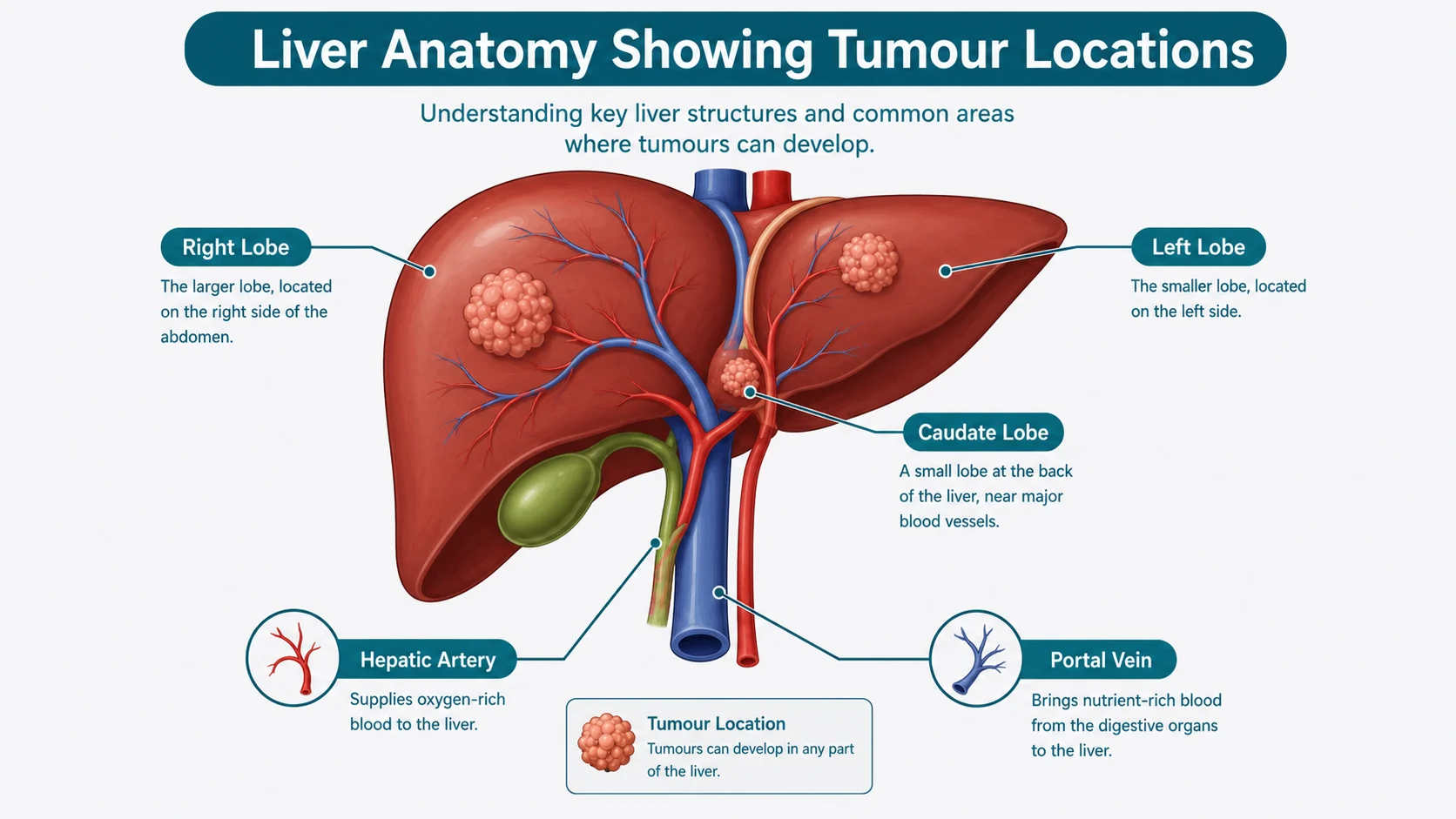
Types of primary liver cancer:
- Hepatocellular carcinoma (HCC) – accounts for 75 to 85% of all liver cancers; develops in hepatocytes (main liver cells)
- Intrahepatic cholangiocarcinoma – develops in the bile ducts inside the liver (covered separately on our bile duct cancer page)
- Hepatoblastoma – rare; primarily affects young children
- Angiosarcoma and haemangiosarcoma – very rare; develops in the blood vessels of the liver
What Causes Liver Cancer?
Liver cancer is most commonly caused by chronic liver disease, hepatitis B infection, hepatitis C infection, and liver cirrhosis are the three leading risk factors for hepatocellular carcinoma in India.
Common liver cancer causes and risk factors include:
- Chronic hepatitis B infection – the single largest liver cancer cause in India; long-term viral infection damages liver cells and triggers cancerous changes
- Chronic hepatitis C infection – causes progressive liver damage leading to cirrhosis and HCC
- Liver cirrhosis – scarring of the liver from any cause (alcohol, hepatitis, fatty liver) significantly raises cancer risk
- Non-alcoholic fatty liver disease (NAFLD) and NASH – increasingly linked to hepatocellular carcinoma in India
- Heavy alcohol use – causes cirrhosis, which is a major precursor to liver cancer
- Aflatoxin exposure – a toxin produced by mould on improperly stored grains and peanuts; a known liver cancer risk factor in some regions
- Diabetes and obesity – associated with fatty liver disease and increased liver cancer risk
- Family history – first-degree relatives with liver cancer or cirrhosis raise individual risk
- Iron overload (haemochromatosis) – excess iron deposits damage the liver over time
Symptoms of Liver Cancer
The most common early signs of liver cancer include upper abdominal pain, unexplained weight loss, and a feeling of fullness, many patients have no symptoms at all in the early stages, which is why regular screening in high-risk individuals is critical.
Liver cancer symptoms often appear only when the tumour has grown significantly. Watch for:
- Pain or discomfort in the upper right abdomen or around the right shoulder blade
- Unexplained weight loss and loss of appetite
- A feeling of fullness after eating small amounts
- Jaundice, yellowing of the skin and eyes (more common in advanced cases)
- Abdominal swelling or bloating (ascites, fluid accumulation in the abdomen)
- Nausea and vomiting
- Persistent fatigue and weakness
- Pale or chalky stools and dark urine
- Fever without an obvious cause
Patients with known cirrhosis, hepatitis B or C should undergo regular liver cancer screening, early detection dramatically improves the chance of curative treatment.
Reach Out for Expert Care
How Is Liver Cancer Diagnosed?
Liver cancer is diagnosed through a combination of blood tests, imaging scans, and in selected cases biopsy, AFP blood marker and CT or MRI scan are the most important diagnostic tools for hepatocellular carcinoma.
Dr. Surender Kumar Dabas follows a structured liver cancer diagnosis pathway for every patient:
- Alpha-fetoprotein (AFP) – a blood tumour marker elevated in most HCC cases; used alongside imaging for diagnosis and monitoring
- Liver function tests (LFTs) – assess the functional reserve of the liver before planning surgery
- Ultrasound – first-line imaging for liver tumour detection; used for routine liver cancer screening in high-risk patients
- CT scan with contrast (triphasic CT) – gold standard for characterising liver tumours; arterial enhancement pattern is diagnostic of HCC without biopsy in many cases
- MRI with liver-specific contrast – the most detailed imaging for small tumours and surgical planning
- PET scan – evaluates spread to lymph nodes or distant organs
- Liver biopsy – performed when imaging is inconclusive; confirms diagnosis and tumour grade
- PIVKA-II (des-gamma-carboxyprothrombin) – an additional tumour marker increasingly used alongside AFP
Stages of Liver Cancer
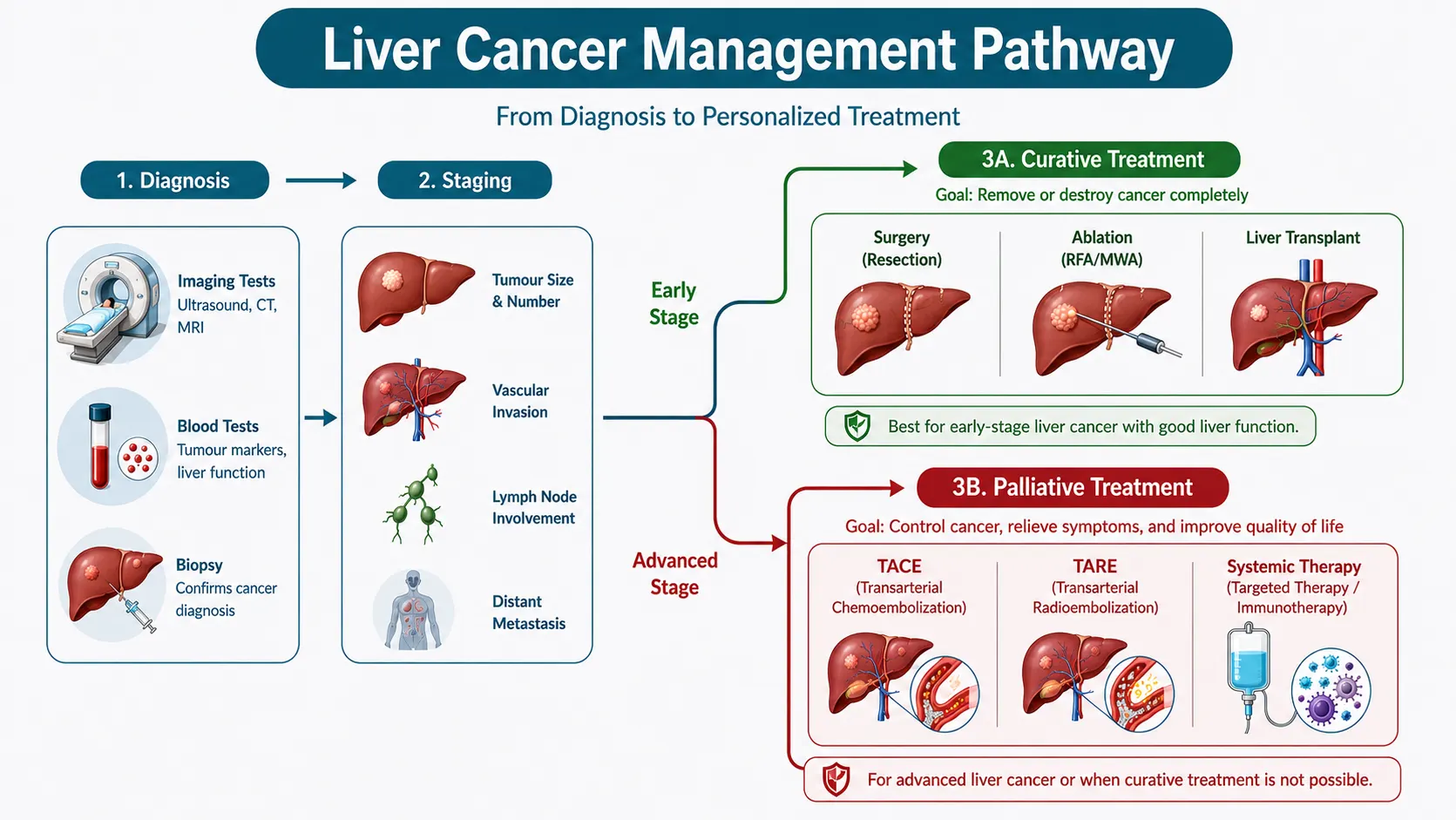
Liver cancer is staged using the Barcelona Clinic Liver Cancer (BCLC) system, which considers tumour size, number, liver function, and patient health, making it the most practical guide for treatment planning.
| BCLC Stage | Description | Treatment Goal |
| Stage 0 (Very Early) | Single tumour under 2 cm, preserved liver function | Curative – surgery or ablation |
| Stage A (Early) | Single or up to 3 tumours under 3 cm, good liver function | Curative – surgery, ablation, or transplant |
| Stage B (Intermediate) | Multiple tumours, no vascular invasion | TACE – tumour control |
| Stage C (Advanced) | Vascular invasion or distant spread | Systemic therapy |
| Stage D (Terminal) | Severe liver failure | Palliative care |
Early-stage liver cancer (BCLC 0 and A) has excellent outcomes with curative treatment. Even intermediate-stage disease can be effectively managed with TACE and other locoregional therapies.
Liver Cancer Treatment Options in Delhi NCR
Liver cancer treatment depends on the stage, tumour size, number of tumours, and liver function, curative options include surgery and ablation for early-stage disease, while advanced liver cancer is managed with TACE, targeted therapy, and immunotherapy.
Dr. Surender Kumar Dabas, one of the best liver cancer surgeons in Delhi NCR, offers a full range of liver cancer treatments personalised to each patient’s stage and liver reserve.
- Liver Resection Surgery (Hepatectomy)
- Surgical removal of the tumour along with a margin of healthy liver tissue
- The preferred curative treatment for liver cancer in patients with adequate liver function and no cirrhosis
- Robotic liver cancer surgery in Delhi, Dr. Dabas performs minimally invasive robotic and laparoscopic hepatectomy using the Da Vinci Xi system
- Benefits of robotic approach: smaller incisions, less blood loss, reduced complications, shorter hospital stay vs. open surgery
- Laparoscopic liver surgery in Delhi is also offered for suitable tumour locations
- Liver Ablation Therapy
- Destroys tumour cells using heat or energy, no surgical incision needed
- Radiofrequency ablation (RFA) for liver cancer, uses electrical current to generate heat and destroy the tumour
- Microwave ablation for liver tumour, uses microwave energy; effective for larger tumours than RFA
- Suitable for patients with early-stage HCC who are not surgical candidates due to poor liver function
- Can be performed percutaneously (through the skin) under CT or ultrasound guidance
- TACE – Transarterial Chemoembolisation
- TACE treatment in Delhi NCR, delivers chemotherapy directly into the artery feeding the liver tumour, followed by blocking blood flow to the tumour
- Used for intermediate-stage liver cancer (BCLC Stage B) with multiple tumours
- Can be used to downstage tumours before surgery or transplant listing
- A well-established, effective locoregional liver cancer treatment option
- TARE / Y-90 Radioembolisation
- Y-90 radioembolisation in Delhi, delivers radioactive microspheres directly into the tumour’s blood supply
- Used for advanced liver cancer with portal vein involvement or as an alternative to TACE
- Allows continued liver function while targeting the tumour with internal radiation
- Targeted Therapy for Liver Cancer
- First-line systemic treatment for advanced hepatocellular carcinoma
- Sorafenib and lenvatinib are standard first-line targeted drugs
- Regorafenib and cabozantinib used in second-line settings
- Slows tumour progression and extends survival in advanced liver cancer treatment
- Immunotherapy for Liver Cancer
- Checkpoint inhibitors (atezolizumab combined with bevacizumab) are now the preferred first-line treatment for many advanced HCC patients
- Nivolumab and pembrolizumab used in second-line or combination settings
- Immunotherapy for liver cancer works by activating the immune system to recognise and attack cancer cells
- Liver Transplantation
- For patients meeting Milan criteria (single tumour under 5 cm, or up to 3 tumours each under 3 cm) with significant cirrhosis
- Removes both the tumour and the diseased liver, addressing both problems simultaneously
- Requires referral to a transplant centre; Dr. Dabas coordinates this pathway for suitable patients
- Palliative Treatment for Liver Cancer
- For advanced or terminal-stage liver cancer, palliative care focuses on managing pain, ascites (abdominal fluid), jaundice, and nutritional support
- Palliative chemotherapy for liver cancer and symptom management can meaningfully extend quality of life
Why Choose Dr. Surender Kumar Dabas for Liver Cancer Treatment in Delhi NCR?
Dr. Surender Kumar Dabas is one of the best surgical oncologists for liver cancer in Delhi NCR with 22+ years of experience, 5,000+ robotic surgeries, and specialist expertise in minimally invasive liver resection and hepatobiliary cancer surgery.
- 22+ years of experience in surgical oncology including complex liver tumour surgery, hepatectomy, and hepatobiliary cancers
- 5,000+ robotic surgeries among the highest robotic surgery volumes for a cancer surgeon in India; applies da Vinci Xi precision to robotic liver cancer surgery in Delhi
- 30,000+ complex cancer surgeries performed across GI, thoracic, urological, and head and neck cancers
- Minimally invasive liver surgery, performs both robotic and laparoscopic liver surgery in Delhi for suitable patients, resulting in faster recovery and fewer complications
- Multidisciplinary liver oncology care, collaborates with hepatologists, interventional radiologists (for TACE, RFA), and medical oncologists to build a complete personalised liver cancer treatment plan
- Clear, compassionate communication, explains liver cancer diagnosis, staging, and all treatment options including surgery, ablation, and systemic therapy in simple language
- Second opinion welcome, patients told their liver tumour is inoperable are encouraged to seek Dr. Dabas’s evaluation, as resectability depends on specialist HPB surgical expertise
- Patients from across India travel for complex and advanced liver cancer treatment in Delhi NCR under Dr. Dabas
Cost of Liver Cancer Treatment in Delhi NCR
Liver cancer treatment cost in Delhi NCR varies depending on:
- Stage and number of tumours, single resectable tumour vs. multifocal advanced HCC
- Type of treatment, liver resection surgery, ablation (RFA/microwave), TACE, or systemic therapy
- Surgical approach, robotic, laparoscopic, or open hepatectomy
- Need for targeted therapy or immunotherapy alongside surgery
- Liver function status and duration of hospital stay
For a personalised cost estimate based on your imaging and reports, you may book a liver cancer consultation in Delhi with Dr. Surender Kumar Dabas at Manipal Hospital Dwarka or Manipal Jivisha Cancer Centre, Sonipat.
If you or a family member has been diagnosed with liver cancer (hepatocellular carcinoma) or is experiencing liver cancer symptoms, early specialist evaluation from one of the best cancer doctors is the most important step.

Dr. Surender Dabas' Medical Content Team
Dr. Surender Dabas' Medical Content Team is committed to providing accurate, reliable, and easy-to-understand information on cancer care. Working closely with oncology experts, the team ensures that every article is medically reviewed, up-to-date, and designed to help patients and their families better understand cancer, treatment options, and recovery.

 WhatsApp