
Kidney Cancer Treatment in Delhi NCR
Kidney cancer is the uncontrolled growth of abnormal cells in one or both kidneys, most commonly starting in the lining of tiny tubes inside the kidney, a type called renal cell carcinoma (RCC).
Kidney cancer, also called renal cancer, is one of the ten most common cancers in India. It often shows no symptoms in early stages, which is why many cases are discovered incidentally during scans done for other reasons.
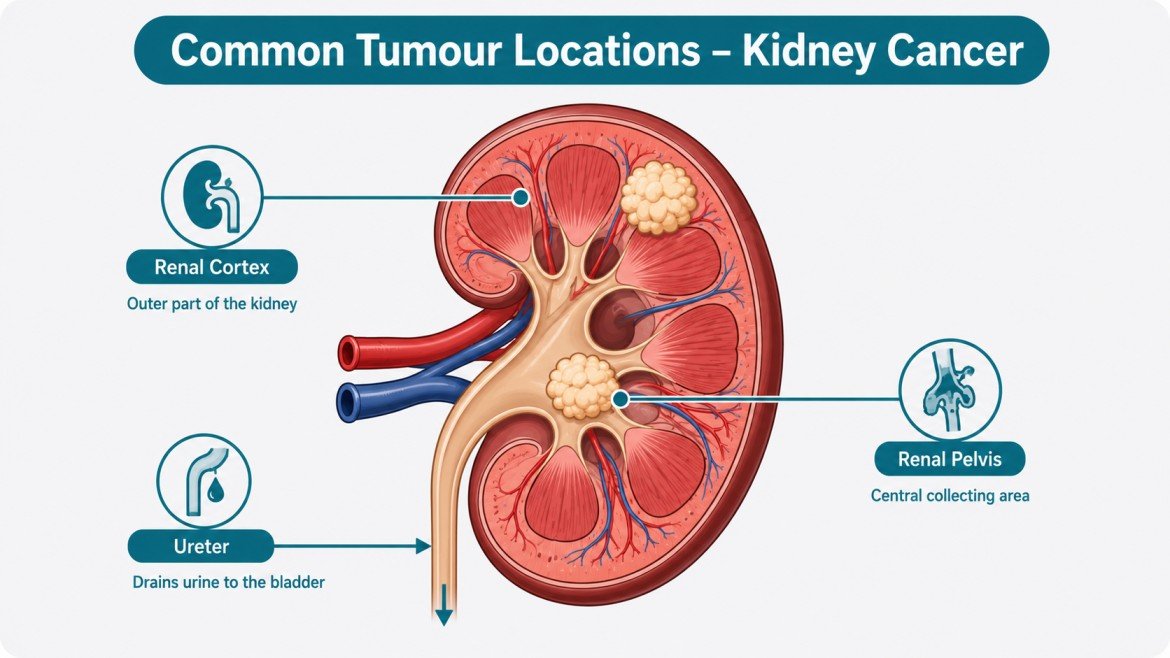
Common types of kidney cancer:
- Renal cell carcinoma (RCC) – accounts for about 90% of all kidney cancers
- Transitional cell carcinoma – starts in the renal pelvis where the kidney meets the ureter
- Wilms tumour (nephroblastoma) – primarily affects children
- Renal sarcoma – rare, starts in the connective tissue of the kidney
Symptoms of Kidney Cancer
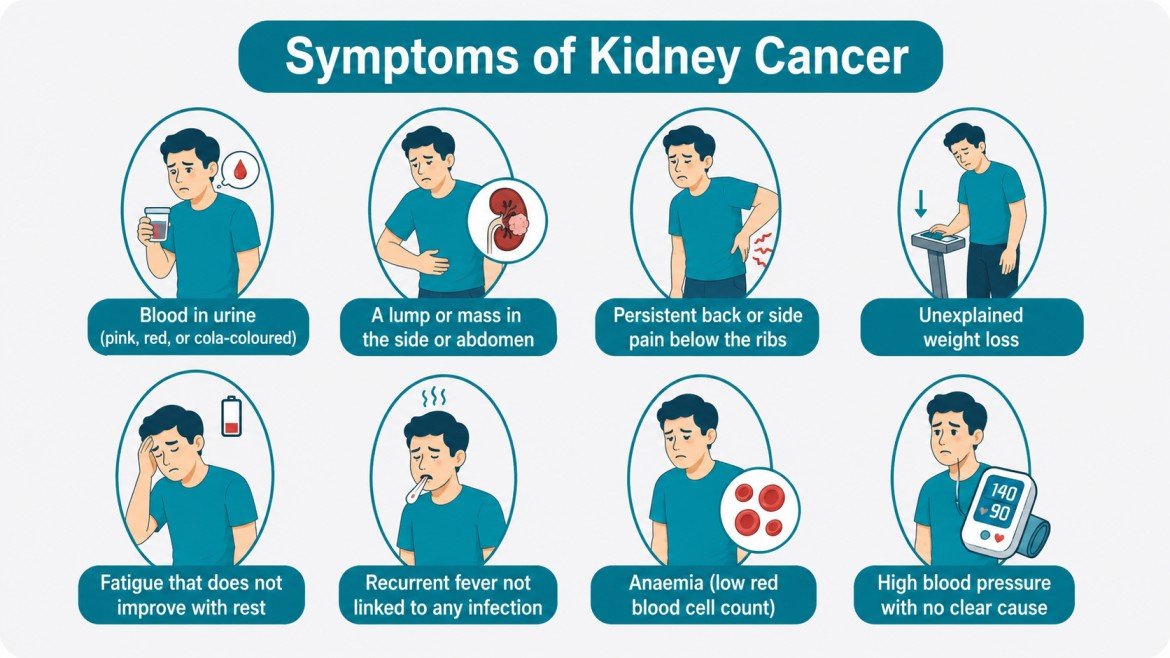
Kidney cancer often has no symptoms in early stages, when it does cause symptoms, blood in the urine is the most common warning sign.
Many patients do not notice symptoms until the tumour has grown. See a kidney cancer doctor in Delhi NCR if you experience any of the following:
How Is Kidney Cancer Diagnosed?
Kidney cancer is diagnosed using imaging scans like CT or MRI, which can detect tumours and help determine whether surgery is needed, a biopsy is not always required.
Dr. Surender Kumar Dabas takes a structured approach to diagnosing kidney tumours:
- Urine tests – to check for blood or abnormal cells
- Blood tests – kidney function, full blood count, liver enzymes
- Ultrasound – first-line imaging to identify a kidney mass
- CT scan with contrast – gold standard for staging and surgical planning
- MRI scan – used when CT is inconclusive or for assessing vascular involvement
- PET scan – to check for spread to other organs
- Renal biopsy – in select cases, to confirm diagnosis before systemic therapy
Reach Out for Expert Care
Stages of Kidney Cancer
Kidney cancer is staged from I to IV, Stage I and II are localised to the kidney, while Stage III and IV indicate spread to nearby tissues or distant organs.
| Stage | Description |
| Stage I | Tumour 7 cm or smaller, confined to the kidney |
| Stage II | Tumour larger than 7 cm, still confined to the kidney |
| Stage III | Cancer has spread to nearby lymph nodes or major blood vessels |
| Stage IV | Cancer has spread to distant organs such as lungs, liver, or bones |
Early-stage kidney cancer (Stage I and II) has excellent surgical outcomes. Even Stage III can be treated effectively with robotic surgery.
Kidney Cancer Treatment Options in Delhi NCR
Surgery is the primary treatment for kidney cancer, robotic nephrectomy and partial nephrectomy are the most effective surgical options for localised renal tumours.
Dr. Surender Kumar Dabas offers a full range of kidney cancer treatments in Delhi NCR, customised to each patient’s stage, tumour size, and kidney function.
- Robotic Partial Nephrectomy (Kidney-Sparing Surgery)
- Removes only the tumour while preserving the healthy kidney
- Preferred for tumours under 7 cm and patients with a single kidney
- Performed using the da Vinci robotic system for greater precision
- Shorter hospital stay, less blood loss, faster recovery
- Robotic Radical Nephrectomy
- Complete removal of the affected kidney
- Recommended for large tumours or when the kidney cannot be saved
- Minimally invasive approach reduces complications versus open surgery
- Most patients can live normally with one healthy kidney
- Minimally Invasive Laparoscopic Surgery
- An alternative to open surgery for suitable candidates
- Smaller cuts, reduced pain, and quicker return to daily life
- Targeted Therapy
- Used for advanced or metastatic kidney cancer
- Drugs like sunitinib, pazopanib, and cabozantinib block tumour growth signals
- Often used after surgery or when surgery is not possible
- Immunotherapy
- Checkpoint inhibitors (nivolumab, pembrolizumab) activate the immune system to attack cancer cells
- Used in advanced renal cell carcinoma, sometimes combined with targeted therapy
- Active Surveillance
- For very small, slow-growing tumours in elderly or high-risk patients
- Close monitoring with regular scans instead of immediate surgery
Why Robotic Surgery for Kidney Cancer?
Robotic kidney cancer surgery offers more precision than open surgery, with smaller cuts, less blood loss, and faster recovery, making it the preferred approach for most kidney tumours today.
Dr. Surender Kumar Dabas performs robotic nephrectomy in Delhi using the da Vinci robotic system. Here is why it matters for kidney cancer patients:
- Greater surgical accuracy, the robotic arms move with 3D precision inside small spaces
- Significantly less blood loss during the procedure
- Lower risk of infection and post-operative complications
- Hospital stay typically 2 to 3 days versus 7 to 10 days for open surgery
- Faster return to normal activity
- Better cosmetic outcome with smaller scars
- Critical for organ-preserving kidney cancer surgery, saves more functional kidney tissue
Why Choose Dr. Surender Kumar Dabas for Kidney Cancer Treatment in Delhi NCR?
Dr. Surender Kumar Dabas is a robotic urologic oncology surgeon in Delhi NCR with specialised training in kidney tumour surgery, performing high volumes of robotic nephrectomy with a focus on preserving kidney function wherever possible.
When it comes to kidney cancer, the surgeon’s experience with robotic technique directly affects how much healthy kidney tissue is saved, and your long-term quality of life. Here is why patients across India choose Dr. Dabas:
- 22+ years of experience in complex cancer surgery, including kidney, prostate, and bladder cancers
- 5,000+ robotic surgeries, among the highest robotic surgery volumes for a cancer surgeon in India
- Da Vinci Xi robotic system, precise kidney tumour removal through small keyhole incisions, less blood loss, faster recovery
- Organ preservation first, robotic partial nephrectomy is always the preferred approach when tumour size and location allow
- Clear communication, Dr. Dabas explains diagnosis, surgical options, and what to expect at every stage, so patients and families can make informed decisions
Patients from across India and abroad come to Dr. Dabas for kidney cancer treatment by Dr. Surender Kumar Dabas, particularly for robotic surgery cases where precision and kidney preservation are the priority.
Who Is a Candidate for Robotic Kidney Surgery?
Most patients with localised or locally advanced kidney cancer are candidates for robotic nephrectomy, your suitability depends on tumour size, location, and overall kidney function.
You may be a suitable candidate if:
- You have a confirmed kidney tumour on imaging
- The cancer is localised (Stage I, II, or selected Stage III)
- You have adequate kidney function to tolerate surgery
- You prefer a minimally invasive approach with faster recovery
- You have a single kidney and need organ-preserving surgery
- Previous abdominal surgery is not necessarily a barrier
Dr. Surender Kumar Dabas, one of the best robotic cancer surgeon in Delhi NCR, evaluates each patient individually before recommending surgery.
Cost of Kidney Cancer Treatment in Delhi NCR
The kidney cancer surgery cost in Delhi NCR varies based on several factors:
- Type of surgery (partial vs. radical nephrectomy, robotic vs. laparoscopic)
- Stage and complexity of the tumour
- Need for additional treatments such as targeted therapy or immunotherapy
- Hospital stay duration and post-operative care
- Individual patient health factors
Robotic cancer surgery may have a higher upfront cost than conventional surgery, but typically leads to shorter hospital stays, fewer complications, and faster recovery, which reduces overall treatment expenses.
For a transparent cost estimate specific to your case, book a consultation with Dr. Surender Dabas, a cancer doctor in Delhi.

Dr. Surender Dabas' Medical Content Team
Dr. Surender Dabas' Medical Content Team is committed to providing accurate, reliable, and easy-to-understand information on cancer care. Working closely with oncology experts, the team ensures that every article is medically reviewed, up-to-date, and designed to help patients and their families better understand cancer, treatment options, and recovery.

 WhatsApp