
Breast Cancer Awareness Month: Why Early Detection Can Change the Treatment Journey
Breast Cancer Awareness Month exists for a reason that goes beyond pink ribbons and social media posts. It is a reminder that recognising bodily changes, understanding breast cancer screening, and seeking timely medical evaluation can genuinely shape how breast cancer is diagnosed and managed. Awareness does not prevent breast cancer, but it can shorten the distance between noticing something unusual and getting a clear answer.
For many women, the uncertainty around breast changes and what a diagnosis might involve can be more unsettling than the symptoms themselves. Understanding the pathway from a first noticed change to a confirmed breast cancer diagnosis, and how earlier evaluation can open up different treatment conversations, is a useful starting point for anyone navigating this area.
Why Early Detection Matters in Breast Cancer
When breast cancer is identified before it has progressed significantly, doctors often have more options to consider. Early detection of breast cancer can influence the stage at diagnosis, the range of surgical approaches available, and whether additional treatments such as chemotherapy or radiotherapy are needed alongside surgery.
This does not mean early detection guarantees a particular outcome. Breast cancer is not one disease but a group of conditions that behave differently depending on tumour type, biology, stage and the individual patient. Two patients with what looks like a similar finding can need quite different treatment plans once staging and tumour characteristics are fully understood.
What early detection does offer is a wider set of treatment pathways to discuss with a specialist, rather than a smaller one. It can mean more flexibility in surgical planning, a broader conversation around whether systemic treatment is needed before or after surgery, and generally more time for a patient and their care team to weigh options carefully.
What Breast Cancer Signs Should You Know?
Many women are familiar with the idea of a breast lump, but breast cancer symptoms can present in several ways. Changes worth having assessed by a doctor include:
- A new lump in the breast or underarm area
- Changes in breast size, shape or contour
- Skin changes, such as dimpling, redness or thickening
- Nipple changes, including inversion or unusual discharge
- Persistent pain or discomfort that does not resolve
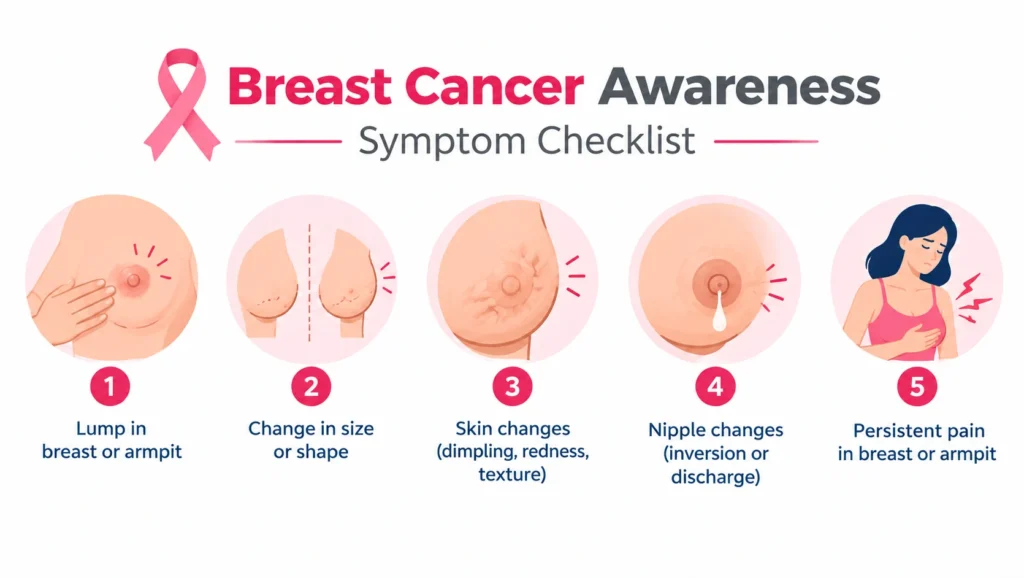
It is important to say clearly that most breast changes are not cancer. Hormonal fluctuations, cysts, and benign growths are common causes. However, any change that is new, persistent, or unexplained should be reviewed by a healthcare professional rather than monitored indefinitely at home.
Breast Cancer Screening: When Should You Consider It?
Breast cancer screening, most commonly through mammography, is designed to detect breast cancer before symptoms become noticeable. This is different from diagnosis. A screening test identifies findings that need further evaluation; it does not confirm cancer on its own.
There is no single screening schedule that applies to everyone. Recommendations can vary based on age, family history, personal risk factors, and local clinical guidelines, which is why screening decisions are best discussed individually with a doctor rather than taken from general information alone.
Self-awareness of how the breasts normally look and feel remains a useful habit alongside, not instead of, clinical screening, making it easier to notice a genuine change and raise it early.
What Happens After an Abnormal Finding?
An abnormal mammogram or scan can understandably cause anxiety, but it does not automatically mean cancer. Many abnormal findings turn out to be benign once properly assessed. The typical pathway includes:
- A clinical assessment and detailed history
- Further imaging, such as targeted mammography, ultrasound or MRI where appropriate
- A biopsy, when the imaging findings warrant tissue sampling
- Pathology review to characterise the tumour, if present
- Staging and treatment planning, involving a multidisciplinary team
Each step narrows down the picture, and patients are rarely given a definitive diagnosis from a single test alone. This structured pathway exists precisely because imaging, however advanced, cannot reliably distinguish between benign and cancerous changes without tissue confirmation.
Breast Cancer Treatment: Understanding Your Options
Breast cancer treatment is built around the specific characteristics of each tumour, and it typically draws on more than one approach. The main pillars are:
- Breast cancer surgery, which may involve breast-conserving surgery (removing the tumour while preserving the breast) or mastectomy (removal of the breast), along with assessment of the lymph nodes under the arm
- Systemic treatment, such as chemotherapy, hormone therapy or targeted therapy, depending on the tumour’s biology
- Radiotherapy, often used after breast-conserving surgery or in specific situations after mastectomy
The choice between these options, and the sequence in which they are used, depends on the tumour’s stage, grade, hormone and genetic markers, and the patient’s overall health. Earlier diagnosis tends to widen the surgical options available, including the possibility of breast-conserving approaches in more cases, though this is never guaranteed and depends entirely on individual findings.
Why Choosing the Right Cancer Specialist Matters
Breast cancer care benefits from more than a single consultation or test. Accurate diagnosis, appropriate staging, and a treatment plan built around multidisciplinary input, involving surgical oncology, medical oncology, and radiology, all contribute to a more complete picture of a patient’s condition.
For patients researching a breast cancer specialist in Delhi, or looking for a breast cancer surgeon in Delhi, it is worth considering a specialist’s familiarity with complex cancer cases, access to comprehensive diagnostic facilities, and willingness to explain options clearly rather than recommend a single fixed approach.
Dr Surender Kumar Dabas, Chairman of Robotic Surgery and Comprehensive Cancer Care at Manipal Comprehensive Cancer Center, brings broad experience in complex cancer surgery and individualised treatment planning across multiple cancer types. Patients searching for the best cancer doctor in Dwarka, the best cancer doctor in Delhi, or the best cancer surgeon in Delhi are encouraged to prioritise this kind of thorough, multidisciplinary assessment, where every treatment recommendation is explained clearly and tied to their specific diagnosis.
A good specialist consultation should leave a patient with a clearer understanding of their own condition, not just a recommended procedure. This includes time to ask questions, discuss concerns about surgery or recovery, and understand how a proposed plan connects to the particular characteristics of their cancer.
Breast Cancer Awareness Month: A Reminder to Act Early
Breast Cancer Awareness Month is, at its core, a prompt to pay attention rather than to panic. Persistent or unusual breast changes are worth discussing with a qualified healthcare professional, and screening conversations are worth having even without symptoms, particularly for those with relevant risk factors.
Early detection does not guarantee a specific outcome, and no responsible specialist would suggest otherwise. What it does offer is more time, more information and, often, more treatment options to consider alongside an experienced cancer care team.

 WhatsApp