
Understanding and Treating Ovarian Cancer with Robotic Surgery
A diagnosis of ovarian cancer, or even the possibility of one, can feel overwhelming. It develops when abnormal cells in the ovaries grow uncontrollably, and it is one of the harder gynaecological cancers to catch early, as symptoms are often subtle. This makes early evaluation and careful treatment planning particularly important.
Surgery remains central to treatment for many patients, whether to remove the tumour, assess how far the disease has spread, or work alongside chemotherapy. In recent years, robotic surgery for ovarian cancer has become an option worth discussing for certain patients, offering a minimally invasive approach in selected cases. This article explains what ovarian cancer is, how it is diagnosed and treated, and where robotic surgery may fit in.
What Is Ovarian Cancer?
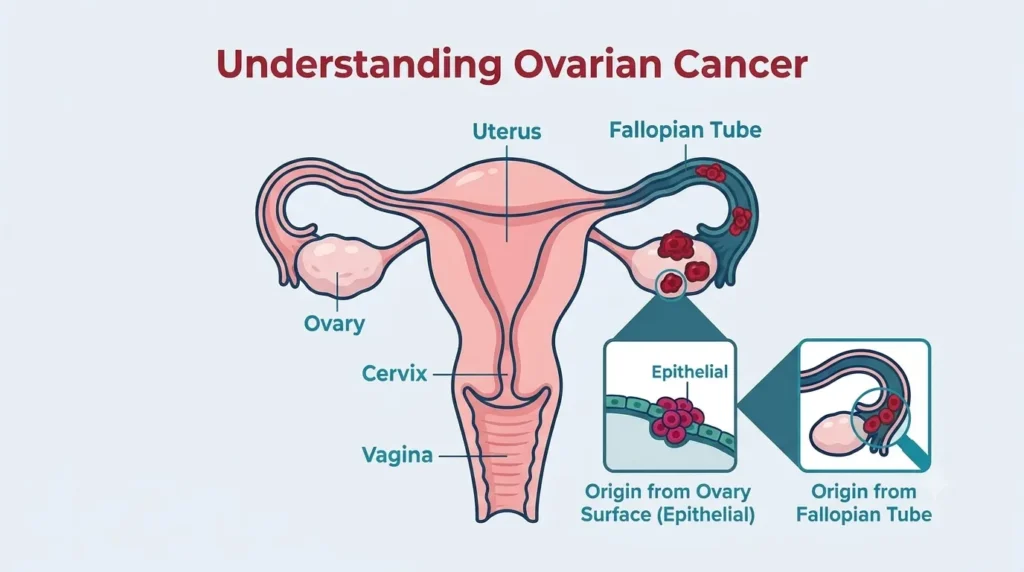
The ovaries are two small organs on either side of the uterus that produce eggs and hormones such as oestrogen and progesterone. Ovarian cancer occurs when cells within or around the ovaries begin to divide abnormally and form a tumour.
It is not a single disease, but includes several types, such as epithelial ovarian cancer (the most common), germ cell tumours and stromal tumours, each behaving differently. This is why an accurate diagnosis is essential before deciding on treatment.
What Are the Symptoms of Ovarian Cancer?
Ovarian cancer symptoms are often vague in the early stages, which is part of why the disease can be hard to detect. Commonly reported symptoms include:
- Persistent bloating that does not settle
- Pelvic or abdominal pain
- Feeling full quickly after eating small amounts
- Changes in bowel or bladder habits
- Unexplained weight loss or gain
- Ongoing fatigue
These symptoms are common to many less serious conditions. Experiencing one does not mean cancer, but symptoms lasting more than a few weeks should be discussed with a doctor.
How Is Ovarian Cancer Diagnosed?
Diagnosis usually involves a combination of assessments, since no single test can confirm the disease on its own. A doctor typically begins with a medical history and a pelvic examination, followed by:
- Imaging, such as a pelvic ultrasound or CT scan, to assess the size and characteristics of any growth
- Blood tests, including tumour marker tests where clinically indicated
- Tissue diagnosis, through biopsy or surgery, which remains the definitive way to confirm ovarian cancer and its exact type
The pathway is often tailored to the individual, sometimes involving a gynaecological oncologist from an early stage.
How Is Ovarian Cancer Treated?
There is no single ovarian cancer treatment that suits every patient. Decisions depend on the type and stage of cancer, whether it has spread, overall health and personal treatment goals.
Ovarian cancer treatment options broadly include:
- Surgery, to remove the tumour and any surrounding affected tissue
- Chemotherapy, before or after surgery, or sometimes as the primary treatment
- Targeted or other systemic therapies, used in specific situations
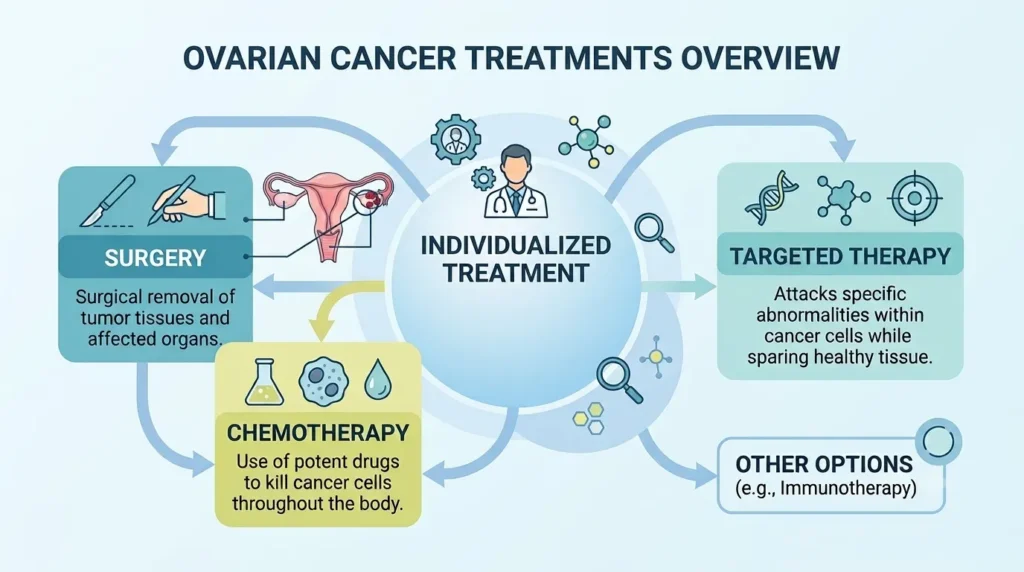
Many patients receive a combination of these, guided by a multidisciplinary team of oncologists.
What Is Robotic Surgery for Ovarian Cancer?
Robotic surgery is a minimally invasive technique in which the surgeon operates through small incisions using robotic-assisted instruments, guided by a magnified, high-definition view of the surgical area.
The surgeon remains in control at all times, directing every instrument movement from a console within the operating theatre. The robotic system does not operate independently; it provides enhanced visualisation and steadier, more precise instrument movement than the human hand alone.
Robotic surgery for ovarian cancer is not suitable for every patient or stage of disease. It is one of several approaches, alongside open and conventional laparoscopic surgery.
When May Robotic Surgery Be Considered for Ovarian Cancer?
Whether robotic ovarian cancer surgery is appropriate depends on an individual assessment, including:
- The stage and extent of the disease
- The location and size of the tumour
- Any previous abdominal or pelvic surgeries
- Overall health and fitness for surgery
- The complexity of the planned procedure
In patients with more advanced disease, open surgery may be more appropriate. The decision is always made case by case, not as a default preference.
Potential Benefits of Robotic Surgery
In appropriately selected patients, robotic cancer surgery may offer certain advantages over open surgery, such as:
- Smaller surgical incisions
- Enhanced, magnified visualisation
- More precise instrument movement
- Potentially less blood loss in suitable procedures
- A potentially shorter hospital stay and recovery in selected cases
These are potential benefits, not guaranteed outcomes, and they vary between patients.
Choosing the Right Cancer Surgeon for Ovarian Cancer
Selecting a surgeon is one of the most important decisions a patient with ovarian cancer will make. When searching for the best cancer surgeon in Delhi or the best cancer surgeon in Dwarka, it is worth considering:
- Experience in complex cancer surgery, not only routine gynaecological procedures
- Specific experience with robotic cancer procedures
- Access to multidisciplinary cancer care and postoperative support
- A willingness to build an individualised treatment plan rather than a one-size-fits-all approach
Patients researching the best robotic cancer surgeon in Delhi should feel comfortable asking about a surgeon’s experience before proceeding with treatment.
Robotic Cancer Surgery in Delhi with Dr. Surender Kumar Dabas
Dr. Surender Kumar Dabas is a surgical oncologist based in Delhi with over 22 years of experience in complex cancer surgery, including robotic-assisted procedures. He has performed more than 30,000 surgeries, of which over 5,000 have been robotic procedures across a range of cancer types.
As a cancer doctor in Dwarka and Delhi with a focus on robotic cancer surgery, Dr. Dabas emphasises individualised treatment planning, assessing each patient’s diagnosis, health and goals before recommending a surgical approach. Patients are encouraged to seek a thorough evaluation of all available options, robotic and otherwise.
Conclusion
Ovarian cancer is a complex disease, and no two patients follow exactly the same treatment path. Timely evaluation, an accurate diagnosis and a personalised plan remain the most important steps a patient can take. Robotic surgery is a valuable option for appropriately selected patients, but it is one of several approaches, and the right one depends entirely on the individual case.

 WhatsApp