
Vaginal Cancer Treatment in Delhi NCR
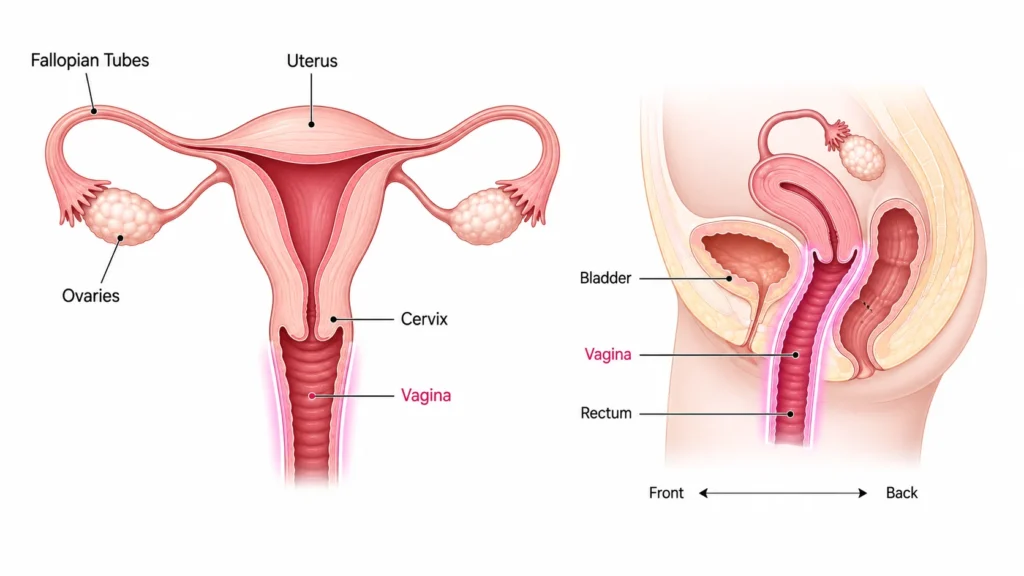
Vaginal cancer is a rare cancer that develops in the vagina, the muscular tube connecting the uterus to the outside of the body, and accounts for a small percentage of all gynaecological cancers, with most cases occurring in women above 60.
Because vaginal cancer is rare, many women are not aware of its symptoms and may delay seeking help. The vagina plays an important role in the female reproductive and urinary system, when cancer develops here, early detection by an experienced gynaecologic cancer specialist in Delhi NCR makes a significant difference to treatment and recovery.
Main types of vaginal cancer:
- Squamous cell carcinoma – the most common type; starts in the flat cells lining the vagina; accounts for about 85% of all vaginal cancers; strongly linked to HPV infection
- Vaginal adenocarcinoma – starts in glandular cells; less common; a rare type called clear cell adenocarcinoma is linked to a drug called DES (diethylstilbestrol) used in pregnancy decades ago
- Vaginal melanoma – extremely rare; starts in pigment-producing cells; tends to be more aggressive
- Vaginal sarcoma – very rare; starts in the muscle or connective tissue of the vaginal wall
What Causes Vaginal Cancer?
Vaginal cancer is most commonly caused by HPV (Human Papillomavirus) infection, the same virus linked to cervical cancer, along with a history of cervical cancer or pre-cancerous changes in the cervix.
Key vaginal cancer risk factors:
- HPV infection – particularly HPV-16 and HPV-18; the most important vaginal cancer cause; regular cervical screening and HPV vaccination help protect against HPV-related vaginal cancer
- History of cervical cancer or CIN (cervical intraepithelial neoplasia) – women previously treated for cervical cancer or pre-cancerous cervical changes have a higher risk of developing vaginal cancer
- Age – most cases occur in women above 60; though younger women with HPV can also develop vaginal cancer
- Vaginal intraepithelial neoplasia (VAIN) – a pre-cancerous condition of the vaginal lining that can progress to vaginal cancer if left untreated
- Smoking – weakens the immune system’s ability to clear HPV infection; multiplies risk
- HIV infection or weakened immunity – reduces the body’s ability to fight HPV
- Previous pelvic radiation – women who received radiation to the pelvis for another cancer have a small increased risk of developing vaginal cancer years later
- DES exposure before birth – women whose mothers took DES (a hormone given to prevent miscarriage) during pregnancy face a higher risk of clear cell vaginal adenocarcinoma
Symptoms of Vaginal Cancer
The most common symptoms of vaginal cancer are abnormal vaginal bleeding, unusual discharge, and pain during sex, any of these lasting more than 3 weeks must be evaluated by a specialist immediately.
Vaginal cancer symptoms are often mistaken for a vaginal infection, menopause-related changes, or other common conditions. Please do not ignore:
- Abnormal vaginal bleeding – bleeding after sex, between periods, or after menopause; the most common warning sign of vaginal cancer
- Unusual vaginal discharge – watery, blood-tinged, or foul-smelling discharge that is different from normal
- Pain during sex (dyspareunia)
- A lump or mass felt inside the vagina
- Pelvic pain or pressure – persistent discomfort in the lower abdomen or pelvis
- Pain or difficulty urinating – when the tumour is near the bladder
- Constipation or rectal pressure – when the tumour is near the rectum
- A feeling of something falling out of the vagina
- Leg swelling – in advanced cases when lymph nodes are involved
If you have had any of these symptoms for more than 3 weeks, please see a vaginal cancer specialist in Delhi NCR without delay. Many of these symptoms are caused by non-cancerous conditions, but a specialist examination is the only way to be sure.
Reach Out for Expert Care
How Is Vaginal Cancer Diagnosed?
Vaginal cancer is diagnosed through pelvic examination, colposcopy, and biopsy. A small tissue sample is taken from the suspicious area to confirm whether cancer is present.
Dr. Surender Kumar Dabas uses a thorough step-by-step vaginal cancer diagnosis process:
- Pelvic examination – a careful physical examination of the vagina, cervix, and surrounding structures; many vaginal cancers are first identified during a routine gynaecological check-up
- Pap smear – may show abnormal cells from the vaginal lining; an important screening tool
- Colposcopy – a magnifying instrument is used to examine the vaginal walls closely under bright light; identifies suspicious areas for biopsy
- Biopsy – a small tissue sample is taken from the suspicious area under local anaesthesia; the definitive test for confirming vaginal cancer
- MRI pelvis – the most important imaging test for vaginal cancer; shows the exact location, size, and depth of the tumour, and whether it has spread to the bladder, rectum, or lymph nodes
- CT scan of the chest, abdomen, and pelvis – checks for spread to lymph nodes or distant organs
- PET-CT scan – used for higher-stage tumours to detect any distant spread
- Cystoscopy – a camera examination of the bladder; done when the tumour is near the bladder to check for involvement
- Proctoscopy – examination of the rectum when the tumour is near the back wall of the vagina
- HPV testing – done on the biopsy tissue to confirm HPV association
Stages of Vaginal Cancer
Vaginal cancer is staged from Stage I to Stage IV; early-stage vaginal cancer confined to the vaginal wall is highly treatable, while advanced stages involve spread to nearby organs or distant sites.
| Stage | What It Means |
| Stage I | Cancer is only in the vaginal wall; has not spread beyond it |
| Stage II | Cancer has spread to tissue just outside the vagina but not to the pelvic wall |
| Stage III | Cancer has spread to the pelvic wall or nearby lymph nodes |
| Stage IVA | Cancer has spread to the bladder or rectum |
| Stage IVB | Cancer has spread to distant organs such as the lungs or liver |
Stage I vaginal cancer is highly curable with the right treatment. Stage II and III are treated with a combination of radiation and chemotherapy with good outcomes in many patients. Even Stage IVA disease can be treated with curative intent in selected cases.
Vaginal Cancer Treatment Options in Delhi NCR
Vaginal cancer is most commonly treated with radiation therapy and chemotherapy, surgery is used for early-stage disease and selected cases, with the approach always planned to preserve bladder and bowel function wherever possible.
Dr. Surender Kumar Dabas, one of the best surgical oncologists in Delhi NCR and a specialist in gynaecologic oncology, offers every evidence-based vaginal cancer treatment option, personalised to your stage and needs.
- Surgery for Vaginal Cancer
- Used for early-stage vaginal cancer (Stage I) and selected recurrent cases
- Wide local excision – removes the tumour and a margin of healthy vaginal tissue; used for small, superficial tumours
- Partial vaginectomy – removes the affected part of the vagina; used for tumours limited to one area
- Total vaginectomy – complete removal of the vagina; used for more extensive disease; vaginal reconstruction can be performed at the same time
- Radical surgery (pelvic exenteration) – reserved for very advanced or recurrent disease; involves removal of the vagina along with the bladder, rectum, or both; only considered when the cancer cannot be controlled otherwise
- Robotic surgical approach – Dr. Surender Kumar Dabas is one of the best robotic cancer surgeons in Delhi NCR; uses the Da Vinci Xi system for selected vaginal and pelvic cancer surgeries with greater precision and smaller incisions
- Radiation Therapy for Vaginal Cancer
- The most commonly used treatment for vaginal cancer – used for most Stage I to Stage III cases, either alone or with chemotherapy
- External beam radiation therapy (EBRT) – radiation targeted precisely at the vagina and surrounding lymph nodes from outside the body
- Brachytherapy (internal radiation) – a radiation source is placed directly inside the vagina to deliver high-dose radiation to the tumour; very effective for early-stage vaginal cancer and for boosting the dose in advanced cases
- IMRT (Intensity-Modulated Radiation Therapy) – a precise form of external radiation that targets the tumour while protecting the bladder, rectum, and surrounding healthy tissue
- Radiation preserves the vagina and surrounding structures in most early-stage patients, a significant benefit compared to surgery
- Concurrent Chemoradiation
- Chemotherapy (cisplatin) given alongside radiation for Stage II and Stage III vaginal cancer
- Chemotherapy makes radiation more effective at killing cancer cells
- The standard approach for most intermediate and advanced vaginal cancer cases
- Given as weekly infusions during the radiation treatment course
- Chemotherapy for Vaginal Cancer
- Used as palliative treatment for Stage IVB vaginal cancer or recurrent disease
- Combination regimens including cisplatin, paclitaxel, and carboplatin are most commonly used
- Helps control cancer growth and manages symptoms in advanced disease
- Targeted Therapy and Immunotherapy
- Pembrolizumab – a checkpoint inhibitor showing activity in recurrent or advanced vaginal cancer, particularly in HPV-positive and high PD-L1 cases
- Bevacizumab – anti-VEGF targeted therapy used in combination with chemotherapy for advanced disease
- Molecular profiling of the tumour helps identify patients who may benefit from targeted or immunotherapy options
- Vaginal Reconstruction
- For women who require vaginectomy, vaginal reconstruction can be performed using tissue from the thigh or abdomen (flap reconstruction)
- Reconstruction aims to preserve sexual function and quality of life after treatment
- Discussed with every patient before surgery so you can make an informed decision
Why Choose Dr. Surender Kumar Dabas for Vaginal Cancer Treatment in Delhi NCR?
Dr. Surender Kumar Dabas is one of the best cancer doctors in Delhi NCR, with 22+ years of experience, 5,000+ robotic surgeries, and specialist expertise in gynaecologic cancer surgery including vaginal, uterine, and ovarian cancers.
- 22+ years of experience in surgical oncology, including vaginal cancer, uterine cancer, cervical cancer, and complex gynaecological cancers
- One of the Best cancer doctor in Dwarka, consults at Manipal Hospital, Sector 6, Dwarka; one of Delhi NCR’s best-equipped cancer surgery hospitals
- One of the best robotic cancer surgeon in Delhi NCR and India – uses the Da Vinci Xi system for selected vaginal and pelvic cancer surgery with greater precision and minimal complications
- 5,000+ robotic surgeries and 30,000+ complex cancer surgeries performed
- Quality of life focus – vaginal reconstruction and preservation of bladder and bowel function are always considered in the treatment plan
- HPV-aware treatment – all eligible patients receive HPV testing; results guide treatment planning and intensity
- Multidisciplinary care – works with radiation oncologists, medical oncologists, and reconstructive surgeons for a complete personalised vaginal cancer treatment plan
- Sensitive, compassionate communication – understands that a diagnosis of vaginal cancer can feel overwhelming and deeply personal; every patient is given time, privacy, and clear information
- Patients never feel rushed – Dr. Dabas and his team ensure you and your family fully understand the diagnosis, treatment options, and what to expect at every stage
Vaginal Cancer Treatment Cost in Delhi NCR
The cost of vaginal cancer treatment in Delhi NCR depends on:
- Stage and location of the tumour
- Type of treatment – surgery, radiation, brachytherapy, or chemoradiation
- Whether vaginal reconstruction is required
- Chemotherapy or immunotherapy requirements
- Duration of hospital stay and recovery
- Follow-up care and monitoring
For a clear, personalised vaginal cancer treatment cost estimate in Delhi NCR, you may book a consultation with Dr. Surender Kumar Dabas.

Dr. Surender Dabas' Medical Content Team
Dr. Surender Dabas' Medical Content Team is committed to providing accurate, reliable, and easy-to-understand information on cancer care. Working closely with oncology experts, the team ensures that every article is medically reviewed, up-to-date, and designed to help patients and their families better understand cancer, treatment options, and recovery.

 WhatsApp